
RTA Achieves Global Leadership in Road Network Asset Condition Index across Five Key Areas
Last Update: Wednesday, August 12, 2026 : 15:18 (+4GMT)
Achievement affirms excellence of RTA’s asset management ecosystem
Dubai. Roads and Transport Authority. 12th August 2027:
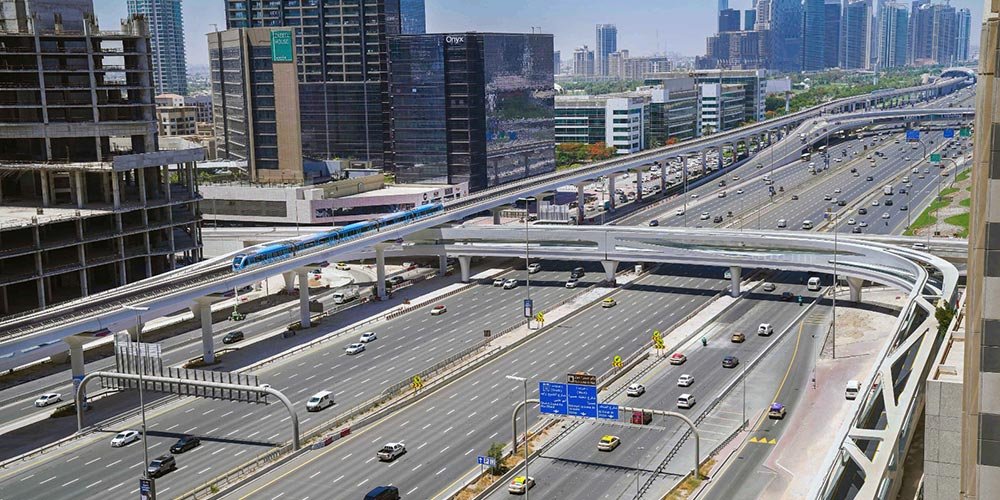
Dubai’s Roads and Transport Authority (RTA) has achieved a new global milestone in infrastructure asset management, recording leading performance in the Road Network Asset Condition Index (ACI). The assessment showed that 95% of road network assets are classified as excellent, reflecting the strength of RTA’s asset management ecosystem and the effectiveness of its periodic assessment, preventive maintenance and proactive maintenance programmes in maintaining asset readiness and long-term sustainability in line with the highest international standards.
The milestone reflects RTA’s strategic commitment to enhancing quality of life, improving infrastructure efficiency and sustainability, and deploying the latest smart technologies in the management and maintenance of road assets. It also supports Dubai’s vision to become the world’s best city in terms of the quality and sustainability of transport and infrastructure services.
RTA’s performance stood out across five key areas: comprehensive asset coverage; the approved quantitative approach used for calculating the ACI; the use of LiDAR, artificial intelligence and automated data extraction technologies; annual assessment across the entire road network; and integration with Geographic Information Systems (GIS). Together, these attributes have further consolidated Dubai’s position as one of the world’s leading cities in road and infrastructure asset management.
The Road Network Asset Condition Index is one of the advanced quantitative tools used globally to measure the structural and operational condition of road network assets. It works by assessing the condition of individual road elements, measuring the level of deterioration and the severity of damage for each asset, and converting the results into a unified score from 0 to 100. This enables assets to be classified by quality level, helps identify maintenance priorities, supports more effective asset lifecycle management, optimises cost efficiency, and strengthens infrastructure sustainability.
RTA developed the index in line with global best practices in road asset management, drawing on a benchmarking exercise covering leading international entities. These included the transportation departments of California, Texas, Florida, Pennsylvania and New York State; Australia’s Austroads; the Ministry of Transport of the People’s Republic of China; Singapore’s Land Transport Authority (LTA); Japan’s Ministry of Land, Infrastructure, Transport and Tourism (MLIT); Cerema, the French Centre for Studies and Expertise on Risks, the Environment, Mobility and Urban Planning; the Swedish Transport Administration; and other international organisations.
The benchmarking covered asset assessment methodologies, comprehensiveness of coverage, index calculation mechanisms, levels of automation, inspection technologies, inspection frequency, integration with Geographic Information Systems (GIS), and customer engagement mechanisms.
RTA uses LiDAR technology to conduct high-precision digital surveys of various road network assets, covering more than 38 asset classes, including traffic signs, safety barriers, lighting poles, traffic signals, pavements, fencing and other road components. The technology provides accurate and up-to-date data that supports decision-making, helps define maintenance priorities, and improves asset lifecycle management.
LiDAR technology can achieve accuracy levels of up to 95% compared with traditional visual assessment, while surveys are carried out with the vehicle in motion and without the need for traffic closures. This helps improve data quality, accelerate assessment processes, enhance the safety of road users and field teams, and reduce time, effort and operational costs.
The system also enables the efficient monitoring and assessment of assets located on highways and freeways, which are difficult to assess using conventional methods. This contributes to improving traffic safety, enhancing proactive maintenance planning, strengthening the resilience and sustainability of the road network, and ensuring that assets remain ready and well maintained in line with global best practices.





- Joyalukkas Strengthens US Footprint with 8th Showroom in Iselin, New Jersey... [3007-Views]
- Spain Defeats Argentina to Claim Second FIFA World Cup Title... [1609-Views]
- H.H. Sheikh Ammar bin Humaid Al Nuaimi chairs Ajman Bank Board Meeting... [1531-Views]
- MS Dhoni Joins Malabar Gold & Diamonds as Brand Ambassador, Strengthening the ... [1215-Views]
- Bogdan guskov brings his perfect finishing record to ufc® fight night abu dhab... [1134-Views]
- Dubai celebrates residents as destination's most powerful advocates through ne... [1100-Views]
- UAE International Investment Council Holds Second Board Meeting, Appointing Ke... [1015-Views]
- Amina Taher Appointed Chairwoman of the Arab Fashion Council... [1010-Views]
- Support Local: Discover The Homegrown Brands Participating in Ma'an by Majid A... [911-Views]
- Dubai's off-plan market raises the bar for next-generation landmark luxury dev... [895-Views]
- The Festival of Diamonds Returns: Tanishq Unveils Over 10,000 Natural Diamond ... [894-Views]
- Fertiglobe More Than Doubles Adjusted EBITDA in Q2 2026, Proposes H1 2026 Divi... [875-Views]
- 10th Al Dhaid Date Festival draws large crowds, celebrating the UAE's rich agr... [837-Views]
- e& UAE activates the highest 5.5G modulation (1024QAM) on its live network — a... [829-Views]
- Masdar reaches financial close for world-first US$6.1 billion gigascale 24/7 c... [825-Views]
- Record Profits Driven by Resilience, Sustainable Growth and a Fortress Balance... [820-Views]
- UAE scoops nine medals on opening day of Jiu-Jitsu Asian Championship in Kazak... [800-Views]
- A Benchmark of Trust: The UAE Good Delivery List and the Standard Emirates Gol... [797-Views]
- Al Masaood Automobiles Achieves Highest-Ever Score in Nissan's Global Dealersh... [781-Views]
- Al Masaood CVE Set to Go to UD Trucks Extra Mile Challenge Global Finale in Ja... [778-Views]
