
When Do You Need Armed Security Services? A Guide for Businesses Operating in the UAE
Last Update: Thursday, June 18, 2026 : 15:43 (+4GMT)
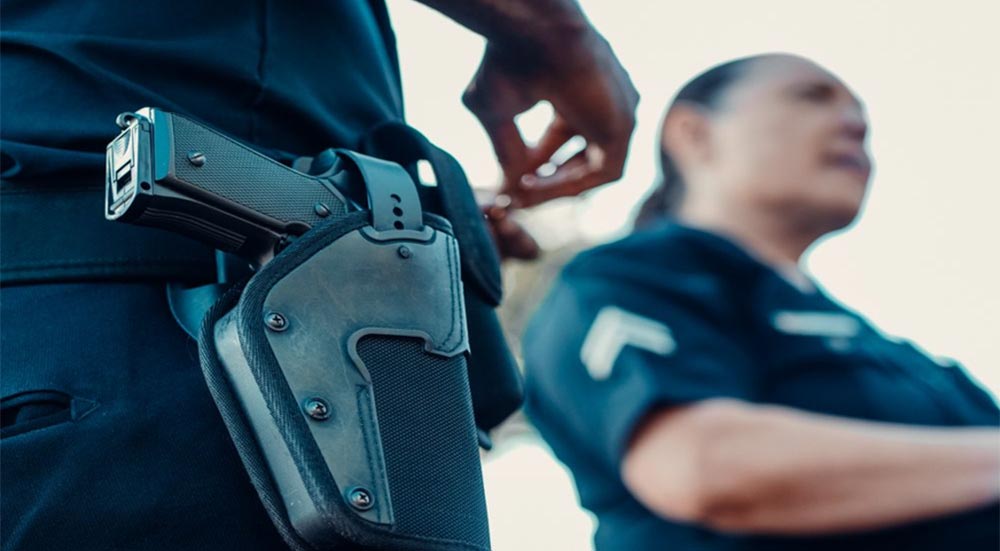 The decision to deploy armed security personnel is not one that most businesses take routinely. In the UAE, armed guarding is subject to strict regulatory controls, and the use of armed officers is generally reserved for situations where the assessed threat level genuinely requires it. This article examines the circumstances under which armed security becomes appropriate, the regulatory framework governing it in the UAE, and how businesses should approach the procurement and management of these services.
The Regulatory Context for Armed Security in the UAE
Armed security operations in the UAE are governed by SIRA in Dubai and by equivalent authorities in other emirates. The regulatory framework distinguishes between unarmed and armed guarding in terms of licensing requirements, personnel qualifications, and the conditions under which deployment is permitted. Companies providing armed security must hold a specific category of SIRA licence, and individual armed officers must complete additional training and qualification requirements beyond the standard guard licence.
The UAE does not have a permissive armed security environment. Armed deployment is not available for general commercial applications on the basis of a client preference; it requires a demonstrable justification aligned with assessed risk. Businesses seeking armed protection for lower-risk commercial settings will typically find that unarmed security, supported by technology and rapid response capability, is both the regulatory expectation and the operationally appropriate solution.
Situations That Typically Justify Armed Security
The table below outlines the categories of operation where armed security is commonly deployed in the UAE, along with the primary risk drivers in each case.
|
Operational Context |
Primary Risk Driver |
Typical Armed Security Application |
|
Cash-in-transit operations |
High-value currency movement between financial institutions and retail |
Armed escort personnel and armoured vehicle security |
|
Jewellery and high-value goods transport |
Targeted theft risk during transportation of significant portable assets |
Armed close protection during movement |
|
Diplomatic and government facilities |
Elevated threat profile requiring lethal deterrence capability |
Static armed posts and armed escort |
|
Critical national infrastructure |
Sabotage and terrorism risk at power, water, and communications facilities |
Armed perimeter security and response capability |
|
High-net-worth individual protection |
Kidnap, extortion, or targeted physical threat to the principal |
Armed close protection officers within a protective detail |
|
Remote or high-risk site operations |
Isolation from police response capability in specific geographic contexts |
Armed security complement to standard guarding operation |
Armed vs Unarmed Security: Making the Assessment
A rigorous threat and risk assessment is the starting point for any decision about whether armed security is warranted. This assessment should consider the nature of the assets being protected, the historical incident pattern for comparable operations in the region, the response time of local law enforcement to the relevant location, and the specific threat intelligence available for the client or site.
In many cases, businesses that initially approach this question assuming they need armed security find that a well-configured unarmed programme, supported by electronic surveillance, access control, and a rapid response arrangement, adequately addresses the risk. Conversely, some operations where the threat is well-understood but underweighted benefit from the deterrence effect that professionally armed security services provide.
The deterrence value of armed security is real but not unlimited. An armed presence changes the risk calculus for opportunistic threats, but it does not eliminate determined, well-resourced adversaries without additional intelligence-led measures. A balanced security programme uses armed capability where it is justified and appropriate, rather than as a general confidence measure.
Personnel Qualifications and Training Requirements
Armed security officers in the UAE must complete training that goes significantly beyond the standard SIRA guard programme. Requirements typically include:
- Firearms handling, safety, and use-of-force training to an approved standard
- Scenario-based assessment covering threat recognition and escalation decision-making
- Legal framework training covering UAE use-of-force law and criminal liability
- Physical fitness standards that exceed general guarding requirements
- Regular re-qualification to maintain competency and licence currency
Businesses procuring armed security should verify that personnel credentials are current and that the provider maintains documented training records accessible to the client on request. An armed officer whose qualification has lapsed creates both a legal liability and an operational risk for the client organisation.
Close Protection and Armed Escort
A subset of armed security that requires distinct consideration is close protection for individuals. Armed close protection, sometimes referred to as armed escort or executive protection, involves a protective detail that travels with the principal and maintains a security perimeter in dynamic, unpredictable environments. This differs from static armed guarding in that the team must assess and respond to threats in real time, often without the benefit of a controlled site with known entry points and predictable visitor patterns.
Effective close protection requires advance work: route reconnaissance, venue security surveys, and liaison with the local security environment before the principal travels. The armed capability within the team is one element of a broader protective operation that includes intelligence assessment, communication protocols, and contingency planning.
Integration with Broader Security Architecture
|
Security Layer |
Function |
Interface with Armed Security |
|
Physical barriers and access control |
Restrict and channel movement of vehicles and personnel |
Defines the perimeter armed posts are protecting |
|
CCTV and surveillance |
Early detection of approaching threats |
Provides advance warning to armed response personnel |
|
Unarmed guarding |
First point of contact; access management |
Escalates to armed personnel when threat level exceeds unarmed capability |
|
Communication systems |
Real-time coordination between security elements |
Essential for armed response coordination and deployment decisions |
|
Police liaison |
Formal channel for incidents requiring law enforcement involvement |
Armed security provider should have established police contacts |
|
Incident command structure |
Clear authority and decision-making during an active incident |
Armed personnel must operate within a defined command framework |
Contractual and Liability Considerations
Armed security contracts require more careful legal review than standard guarding arrangements. Key areas to address include the use-of-force policy governing the conduct of armed personnel, the indemnification arrangements in the event of an incident involving a weapon, the insurance obligations of the provider, and the procedures for reporting any use or threatened use of force to the relevant authorities.
Clients should be clear that deploying armed personnel creates a duty of care obligation that extends beyond the physical presence of the officers. The client organisation's management is accountable for ensuring that the deployment is proportionate, that personnel are properly qualified, and that the overall operation complies with UAE law.
When to Reassess the Need for Armed Security
The need for armed close protection and security services should be reviewed periodically rather than maintained indefinitely on the basis of an initial assessment. Threat environments change, operational contexts evolve, and the justification that supported an armed deployment at project inception may no longer apply twelve months later. Formal review triggers should be built into the contract, including significant changes to the operational environment, major incidents, and scheduled annual reviews.
Businesses that maintain armed security beyond its useful application incur unnecessary cost and manage a liability that the current risk environment does not require. Equally, those that remove armed capability before the threat justification has genuinely diminished create exposure that a lower-cost unarmed arrangement cannot adequately address. The goal is alignment between the security posture and the actual risk profile, reviewed continuously and adjusted as conditions change.
FAQs Section
Is armed security available for general commercial premises in Dubai?
- Not routinely. Armed deployment in the UAE requires a demonstrable threat justification, and the SIRA licence category for armed operations carries stricter requirements than standard guarding. For most commercial premises, unarmed security supported by technology and a rapid response arrangement is both the regulatory expectation and the operationally appropriate solution. Armed deployment without adequate justification creates liability rather than reducing risk.
What additional qualifications must an armed security officer hold in the UAE?
- Beyond the standard SIRA guard licence, armed officers must complete approved firearms handling and safety training, use-of-force assessment, and UAE legal framework training covering criminal liability. Regular re-qualification is required to maintain licence currency, and providers must maintain documented training records for all armed personnel that are available to the client on request.
Who is legally liable if an armed security officer uses force during an incident?
- Liability can extend to the individual officer, the employing security company, and in some circumstances the client organisation. The client's exposure depends on whether the deployment was proportionate to the assessed threat, whether personnel were properly qualified, and whether the operation complied with UAE law — which is why detailed contractual provisions around use-of-force policy are essential before any armed security arrangement is activated.
How does close protection differ from standard armed guarding?
- Standard armed guarding involves protecting a fixed location from a static or patrol-based position. Close protection involves a mobile protective detail operating around a specific individual in dynamic, unpredictable environments, requiring advance route reconnaissance, real-time threat assessment, and continuous coordination between team members. It is a more operationally complex and resource-intensive service that demands a different skill set from site-based armed guarding.
How frequently should the need for armed security be formally reviewed?
- At minimum, the justification for armed deployment should be reviewed annually and following any significant change to the operational environment or available threat intelligence. Formal review triggers should be written into the contract from the start, since maintaining armed security beyond its operational justification creates unnecessary cost and liability, while removing it before the threat has genuinely diminished creates real and unmanaged exposure.






- From a Pair of Shoes to a New Dubai Property: British Expat Wins Through ‘Win ... [3020-Views]
- UAQ Free Zone and Port City Colombo Sign Agreement to Promote Investment ... [1988-Views]
- Sheikh Zayed Falcon Release Programme releases 2,400+ falcons in the wild sinc... [1839-Views]
- DSS FINAL SALE BRINGS UP TO 90% OFF ACROSS MORE THAN 500 BRANDS FOR THE FINAL ... [1568-Views]
- President of the Comoros H.E. Azali Assoumani inaugurates UAE-financed solar p... [1554-Views]
- Environment Agency - Abu Dhabi partners with Japan’s Suwa Falconry Preservatio... [1528-Views]
- e& UAE launches Business Pro AI bundled with Microsoft Copilot at no additiona... [1428-Views]
- Beautyworld Dubai's 30th Edition Brings Global BeautyIcons Together This Octob... [1207-Views]
- Held under the patronage of His Highness Sheikh Hamdan bin Zayed Al Nahyan Ab... [1200-Views]
- Tadej Pogacar Chases Tour de France–Vuelta a Espana Double... [1156-Views]
- In a first-of-its-kind experience for a private Emirati company Hattlan Media... [1155-Views]
- "A Dubai Invite" programme concludes following more than 90,000 applications f... [1103-Views]
- Al Habtoor Motors launches ‘Back to School with Mitsubishi’ offers with Buy No... [1054-Views]
- Stellar Wine Cellar: Emirates to serve exceptional Champagnes and fine wines o... [1031-Views]
- Salik Renews Strategic Partnership for Five Years to Support Tolling System an... [1010-Views]
- LG Empowers Designers and Videographers with New Ultrafine Evo 6K Monitor... [981-Views]
- ‘Win Your Home in Dubai’ Concludes Landmark Citywide Initiative, Driving More ... [964-Views]
- President of Senegal Receives HE Al Zeyoudi in Dakar to Discuss Expanding Trad... [956-Views]
- Abu Dhabi Student’s AI Triage Platform That Guides Patients to Right Care Wins... [873-Views]
- Maserati presents "Luxury, every day": the new campaign that celebrates luxury... [844-Views]
