
Pacemaker Smaller Than a Dirham Changes Patients' Lives
Last Update: Tuesday, December 15, 2020 : 16:29 (+4GMT)
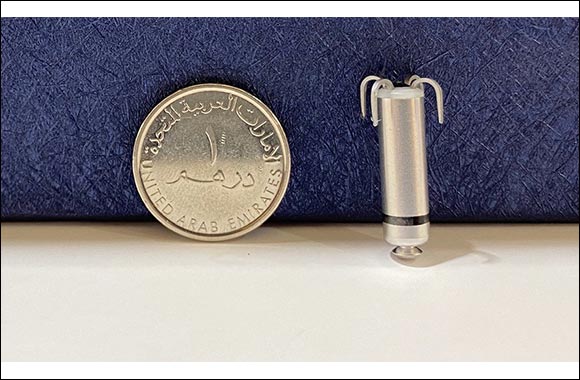
Cleveland Clinic Abu Dhabi Patients Benefit from March to Miniaturization in First-of-its-Kind Procedure
Abu Dhabi, United Arab Emirates, December 15, 2020: Patients at Cleveland Clinic Abu Dhabi, part of Mubadala’s healthcare network, can now benefit from a cutting-edge miniature pacemaker device smaller than a one-dirham coin.
Physicians at the hospital recently performed the UAE’s first implant of a synchronized leadless miniature pacemaker implant. The device, which is 93% smaller than a traditional pacemaker, was implanted into a 22-year-old Emirati woman to correct a slow heart rate problem. Complications from a slow heart rate can include fatigue, dizziness, loss of consciousness and even the risk of sudden death. The 30-minute, minimally invasive procedure took place in November. Since then, two more Emirati patients have benefited from the new pacemaker technology.
Pacemakers have been used to support patients with permanently or intermittently low heart rates since the late 1950s, when the devices were so large that patients would need to carry them next to their body. More recently, pacemakers have been implanted under the skin with wires leading into the heart to allow the device to synchronize the upper and lower chambers, simulating a normal heart rhythm. Technological advances have allowed a new generation of pacemakers to shrink to less than a tenth of their former size and replaced wires with acoustic sensors.
“Traditional pacemakers are inserted in pockets created under the skin of the upper chest. This leaves a very visual reminder for patients that they have a device helping to keep them alive. Inserted through a tiny incision in the leg, this new miniature device can sit inside the lower chamber of the heart and ‘listen’ to the upper chamber to synchronize a patient’s heartbeat without that reminder. Quite apart from the medical benefits, it can do wonders for a patient’s mindset,” said Dr. Khalid Almuti, Section Head for Cardiac Electrophysiology at Cleveland Clinic Abu Dhabi.
While pacemakers have been a mainstay of life-saving medical care for decades, they have always come with the potential for various complications. The ‘pocket’ the device sits in can become infected and the wires that lead from the pacemaker to the heart can become frayed and potentially fracture over the years. By replacing the wires with sensors and sitting directly in a patient’s heart, the risk of developing these complications is eliminated.
“With a ten-year battery life and the ability to report back data on both the heart and its functionality through our remote heart monitoring program, these devices are an almost perfect solution, especially for young people. With no pocket, wires, charging batteries or maintenance, the risk of complications is very small. When the battery runs out, we can simply install a new one or replace it with the next generation of technology that will be available at the time,” continued Dr. Almuti.
For the young woman who became the first in the UAE to benefit from the new device, it was the technology that became the deciding factor.
“I was a bit scared of getting an implant and placing a battery-operated object inside my body. Once I learned how small it was, I was more confident and wanted to proceed. Medical technology has come so far, and the UAE is now providing the most advanced and cutting-edge healthcare globally. I feel very lucky and proud to be the first person to receive this device,” said the patient.
Doctors at Cleveland Clinic Abu Dhabi anticipate that around half of all patients in need of a pacemaker, or up to 250 patients per year, could benefit from the new pacemaker. Following the procedure to install the device, patients can return home the following day.





- From a Pair of Shoes to a New Dubai Property: British Expat Wins Through ‘Win ... [2957-Views]
- UAQ Free Zone and Port City Colombo Sign Agreement to Promote Investment ... [1889-Views]
- Sheikh Zayed Falcon Release Programme releases 2,400+ falcons in the wild sinc... [1779-Views]
- DSS FINAL SALE BRINGS UP TO 90% OFF ACROSS MORE THAN 500 BRANDS FOR THE FINAL ... [1483-Views]
- Environment Agency - Abu Dhabi partners with Japan’s Suwa Falconry Preservatio... [1394-Views]
- e& UAE launches Business Pro AI bundled with Microsoft Copilot at no additiona... [1369-Views]
- President of the Comoros H.E. Azali Assoumani inaugurates UAE-financed solar p... [1346-Views]
- e& UAE leads industry transition to 5G-native IoT with successful testing of R... [1232-Views]
- Held under the patronage of His Highness Sheikh Hamdan bin Zayed Al Nahyan Ab... [1141-Views]
- Beautyworld Dubai's 30th Edition Brings Global BeautyIcons Together This Octob... [1130-Views]
- Tadej Pogacar Chases Tour de France–Vuelta a Espana Double... [1084-Views]
- "A Dubai Invite" programme concludes following more than 90,000 applications f... [999-Views]
- Stellar Wine Cellar: Emirates to serve exceptional Champagnes and fine wines o... [967-Views]
- In a first-of-its-kind experience for a private Emirati company Hattlan Media... [940-Views]
- Al Habtoor Motors launches ‘Back to School with Mitsubishi’ offers with Buy No... [929-Views]
- LG Empowers Designers and Videographers with New Ultrafine Evo 6K Monitor... [922-Views]
- Salik Renews Strategic Partnership for Five Years to Support Tolling System an... [821-Views]
- ORA Land Launches BluBay with Suryakumar Yadav as Brand Ambassador, Reinforcin... [815-Views]
- Your Guide to Winning Big This Summer Through Dubai Summer Surprises... [765-Views]
- Isaac del Toro lands overall title at the Lidl Deutschland Tour... [752-Views]
