
Dubai 2026: The Hyper-Niche Guide to the City's Hidden Subcultures
Last Update: Tuesday, April 28, 2026 : 18:38 (+4GMT)
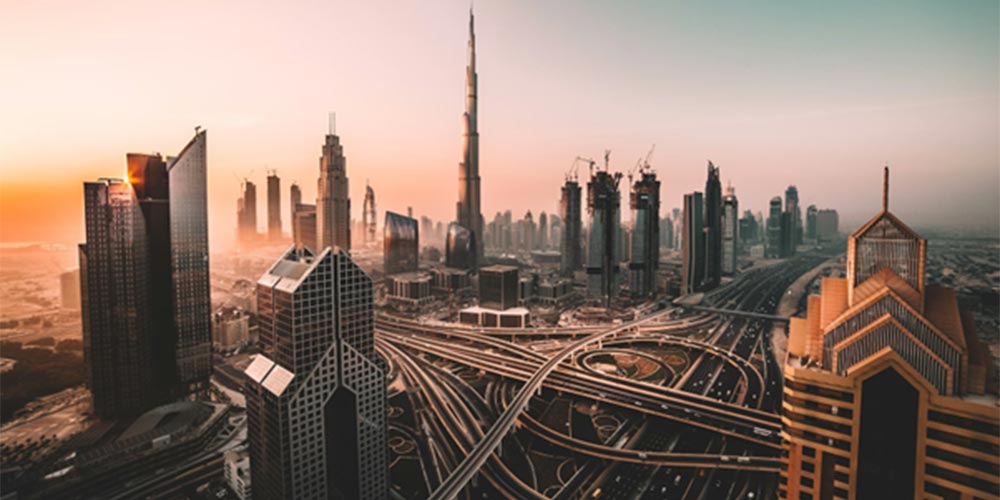
The Death of the Postcard
Dubai has outgrown its glossy image. It still features glass towers, hotel pools, brunches, and choreographed sunsets, but now feels too polished to show how it really moves in 2026. The pulse is lower, running through loading bays, service elevators, old apartment roofs, midnight gaming rooms, and kitchens built for delivery rather than diners. This isn't a bucket-list guide or a map for trespassing or unsafe stunts. It's a look at the micro-scenes formed by locals who work late, build quietly, and create culture in the margins.
Jebel Ali’s Brutalist Soundscapes
Al Quoz already had its moment. Its warehouses became galleries, concept stores, coffee bars, and art-week stopovers with enough signage to make the underground feel scheduled. The deeper edge has shifted south, toward Jebel Ali’s industrial blocks, where the scale gets heavier and the streets feel less curated after midnight.
The sound here is not beach-club house. It is colder. Think synthwave, industrial techno, analog drones, concrete reverb, and bass systems that sound better inside a warehouse than inside any velvet-rope lounge. The rooms are stripped back: exposed ducting, metal shutters, plastic chairs, projectors pointed at blank walls, and a crowd that looks more engineer than influencer.
You do not “discover” these spaces by walking around with a camera. The real scene moves through trust networks, private chats, and small creative circles that screen rigorously because Dubai is not a city where unlicensed parties can pretend the law does not exist. The point is not secrecy for aesthetic reasons. It is survival.
The insider rule is straightforward: if you weren't invited, it's not your space. Respecting this boundary is a key part of the culture.
The Karama Ghost-Kitchen Omakase
Dubai’s food scene has two public faces. One is the reservation economy: tasting menus, skyline views, imported chefs, and polished service. The other is delivery infrastructure, where cloud kitchens and delivery-only brands run behind blank doors with no dining room, no host stand, and no mood lighting. In Dubai, cloud kitchens are treated as regulated food businesses that require commercial licensing and food-safety approval, even when customers never enter the premises.
That hidden machinery has created one of the city’s strangest dining myths: the ghost-kitchen omakase. The format is not a traditional restaurant. It is a private, after-hours table set inside a working delivery hub, where a chef cooks for a small group after the last rush has passed.
The appeal is friction. Delivery riders pass through. Stainless steel reflects harsh light. The air smells of fried garlic, cardamom, grilled meat, vinegar, and dish sanitizer. A dish that would arrive at a fine-dining table under a cloche might land here on a paper plate, next to a stack of takeaway lids.
That contrast is the point. Karama already knows how to feed people without theater. This subculture just pushes that honesty into tasting-menu territory: precise food, zero romance, no marble, no maître d’.
Neon Hubs: Barsha Heights After the Last Metro
Barsha Heights looks ordinary by day: towers, salons, cafeterias, small offices, budget hotels, and workers moving between shifts. After midnight, parts of it flip into a neon second city. The 24/7 gaming lounge has become one of Dubai’s most believable social rooms, especially for coders, esports players, freelancers, and MENA expats who operate on time zones rather than office hours.
The mainstream gaming push is already visible. Dubai’s official gaming program focuses on talent, content, and technology, while the 2026 Dubai Esports and Games Festival is promoted as a 17-day gaming event, with GameExpo scheduled at Dubai World Trade Centre from June 4 to 7. The underground version feels less branded: dark rooms, mechanical keyboards, VR rigs, energy drinks, anime stickers, Discord arguments, and players grinding ranked matches at 3:40 a.m.
These digital hubs are not just for gaming. They serve as midnight living rooms for MENA expats keeping up with global sports leagues between matches, coding sessions, and tournament streams. Observing their typical mobile habits reveals that visitors frequently open MelBet directly on their smartphones to monitor live odds before returning to their mechanical keyboards. The culture here demands constant connectivity and fast data updates to keep up with international events. Regulars seamlessly blend global sports engagement with Dubai’s local digital underground.
The bankroll rule still matters greatly in these late-night spaces. Live odds move fast, esports fatigue clouds judgment, and extended sessions can quickly turn casual tracking into impulsive staking. The sharper regulars always set strict personal limits before they sit down at their desks. Analyzing the proper onboarding sequence shows that users who complete the MelBet download (Arabic: ÊÍãíá MelBet) step securely on their personal devices experience far fewer technical interruptions during high-stakes matches. Staying disciplined ultimately remains the most critical skill for anyone navigating this fast-paced neon environment.
Night Freediving off the World Islands Breakwaters
Luxury boats turn the sea into a photo set. Night freediving strips that away. The niche version of Dubai’s water culture sits closer to primal fear: a small boat, dark water, a flashlight beam, and one breath between the surface and the black below.
The city already has organized freediving schools and training communities, which matters because night water is not a playground. Certified supervision, weather checks, buddy systems, and legal access come first. Visit Dubai lists free-diving training as part of the city’s activity mix, and local freediving operators stress coaching and safety standards rather than casual improvisation.
The draw is silence. Out near the unfinished or dimly lit breakwater zones, Dubai’s skyline seems to fade into distant static. Beneath the surface, the Gulf feels more free and unclaimed. A flashlight softly scans the sand, fish swimming by, concrete edges, and occasionally the gentle flicker of disturbed plankton.
Guerilla Rooftop Farms of Old Deira
Old Deira has a different verticality from Downtown. The buildings are lower, older, more lived-in, and less obsessed with spectacle. Above some 1980s apartment blocks, residents have turned forgotten roofs into improvised growing spaces: tubs, pipes, shade cloth, reused containers, herbs, chilies, tomatoes, and small hydroponic systems patched together from practical need.
Do not romanticize it too much. These rooftops are private residential spaces, and unauthorized access can put residents at risk. The interesting part is not sneaking in; it is understanding why these farms exist. They answer heat, density, food cost, habit, and nostalgia all at once.
A resident might grow mint because tea tastes wrong without it. Someone else experiments with heirloom tomatoes because supermarket produce feels too uniform. Rare herbs move through neighbor networks, not boutique grocers.
From above, Deira’s traffic keeps moving. On the roof, the city briefly becomes quiet and green.
Which Door Would You Open?
To find the real Dubai in 2026, stop staring upward. The towers still matter, but they no longer explain the city’s most interesting culture. Look sideways instead: industrial parks, service corridors, late-night cafés, delivery kitchens, old rooftops, small boats, and digital rooms where people gather after the official city goes to sleep.
The hidden Dubai is not always pretty. Sometimes it is noisy, improvised, legally sensitive, and hard to enter for good reason. That is what makes it real.
Which of these subcultures would you actually dare to explore on your next trip?




- From a Pair of Shoes to a New Dubai Property: British Expat Wins Through ‘Win ... [3062-Views]
- UAQ Free Zone and Port City Colombo Sign Agreement to Promote Investment ... [2030-Views]
- DSS FINAL SALE BRINGS UP TO 90% OFF ACROSS MORE THAN 500 BRANDS FOR THE FINAL ... [1621-Views]
- President of the Comoros H.E. Azali Assoumani inaugurates UAE-financed solar p... [1600-Views]
- Environment Agency - Abu Dhabi partners with Japan’s Suwa Falconry Preservatio... [1569-Views]
- e& UAE launches Business Pro AI bundled with Microsoft Copilot at no additiona... [1462-Views]
- Beautyworld Dubai's 30th Edition Brings Global BeautyIcons Together This Octob... [1266-Views]
- Held under the patronage of His Highness Sheikh Hamdan bin Zayed Al Nahyan Ab... [1244-Views]
- In a first-of-its-kind experience for a private Emirati company Hattlan Media... [1207-Views]
- "A Dubai Invite" programme concludes following more than 90,000 applications f... [1151-Views]
- President of Senegal Receives HE Al Zeyoudi in Dakar to Discuss Expanding Trad... [1122-Views]
- Al Habtoor Motors launches ‘Back to School with Mitsubishi’ offers with Buy No... [1102-Views]
- ‘Win Your Home in Dubai’ Concludes Landmark Citywide Initiative, Driving More ... [1088-Views]
- Stellar Wine Cellar: Emirates to serve exceptional Champagnes and fine wines o... [1076-Views]
- Salik Renews Strategic Partnership for Five Years to Support Tolling System an... [1057-Views]
- Abu Dhabi Student’s AI Triage Platform That Guides Patients to Right Care Wins... [930-Views]
- Maserati presents "Luxury, every day": the new campaign that celebrates luxury... [904-Views]
- Schneider Electric Concludes Innovation Summit Middle East and Africa 2026 in ... [870-Views]
- Isaac del Toro lands overall title at the Lidl Deutschland Tour... [831-Views]
- Benoît Cosnefroy powers to thrilling victory at the Coppa Sabatini... [826-Views]
