
Jaguar Land Rover Upcycles Aluminium to Cut Carbon Emissions by a Quarter
Last Update: Monday, August 24, 2020 : 14:24 (+4GMT)
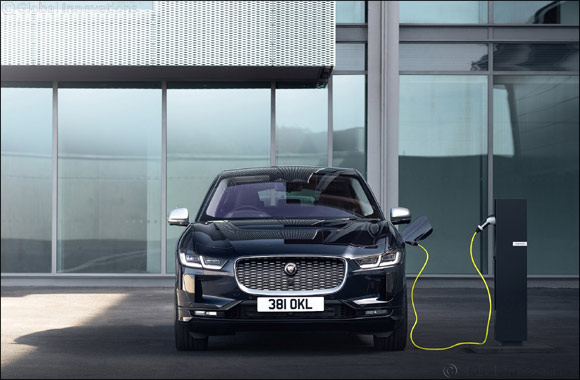
• REALITY project could help reduce aluminium production emissions by up to 26%
• Pioneering recycling process gives a second-life to premium automotive grade aluminium
• Results have revealed new alloy passes initial quality testing
• The research will help close the loop on precious raw materials as part of Jaguar Land Rover’s journey to zero emissions
August 24, 2020: Research by Jaguar Land Rover has revealed how an innovative recycling process could upcycle aluminium waste from drinks cans, bottle tops and end-of-life vehicles into the premium cars of the future and reduce production CO2 emissions by up to 26 per cent.
The REALITY aluminium project is a key part of Jaguar Land Rover’s Destination Zero mission to reduce carbon emissions and its ambition to make societies safer and environments cleaner through relentless innovation. Engineers were able to use the recycled aluminium parts and mix it with a lower amount of primary aluminium to form a new and tested prototype alloy, comparable to the existing Jaguar Land Rover grade and quality.
Analysis of the recycling and manufacturing process revealed it has the potential to reduce alloy production CO2 emissions by up to 26 per cent compared to the current automotive grade, helping Jaguar Land Rover further close the loop on its manufacturing and use of raw materials.
Aluminium is one of the most widely recycled materials in the world and can be melted down and reformed repeatedly without losing quality. Post-consumer recycled aluminium appears in everyday goods such as drinks cans, aerosols, foil food trays and bottle tops but is not widely used for high-end applications such as automotive manufacturing. Nearly 75 per cent of all aluminium produced in the USA and EU is still in use today while the creation of recycled aluminium uses around 90 per cent less energy than raw material production*.
By recovering the high-quality automotive-grade aluminium used to manufacture vehicles, Jaguar Land Rover can re-use the premium properties as part of a blend, reducing the need for virgin aluminium in vehicle production. Typically, end-of-life vehicle scrap is exported overseas where it can be re-used for low-end applications, but new advanced separation technology has enabled it to be upcycled back into the automotive process, helping close the loop and reduce the environmental impact.
Gaëlle Guillaume, Lead Project Manager for REALITY at Jaguar Land Rover, said: “This project has allowed us, for the first time, to recover premium automotive-grade aluminium from scrapped vehicles and re-use its unique properties. The potential of this on the production process is a reduction in CO2 impact as well as helping us re-use even more aluminium.
“As we move into an autonomous, connected and electrified future, with the potential of shared fleets being de-commissioned en masse, it could allow Jaguar Land Rover to engineer this closed loop recycling alloy into tight production schedules to further improve efficiency and environmental benefits.”
The £2 million project, co-funded by Innovate UK and in partnership with Brunel University, is helping Jaguar Land Rover extend its aluminium closed loop and recycling initiatives as part of Destination Zero. Jaguar Land Rover has already reduced its global operating CO2 emissions per vehicle by 50.7 per cent since 2007 and remains committed to an ongoing decarbonisation process. Between September 2013 and March 2020, around 360,000 tonnes of closed-loop scrap have been processed back into the brand’s lightweight aluminium intensive architecture, across all vehicle lines including the Jaguar XE.
Previous Article
Flying Spur in Detail: Specifying the Ultimate Rear Cabin
Next Article
Renault of Arabian Automobiles Builds Digital Offering to Enhance...
Related Articles More Automobile & Motoring ›


Most Viewed – Last 30 Days
- Joyalukkas Strengthens US Footprint with 8th Showroom in Iselin, New Jersey... [2905-Views]
- Group-IB launches Purple Teaming service to close the gap between security inv... [2369-Views]
- Mercato Takes Media on a Magical Summer Journey with The Grand Comedy Circus a... [2244-Views]
- Spain Defeats Argentina to Claim Second FIFA World Cup Title... [1458-Views]
- H.H. Sheikh Ammar bin Humaid Al Nuaimi chairs Ajman Bank Board Meeting... [1346-Views]
- MS Dhoni Joins Malabar Gold & Diamonds as Brand Ambassador, Strengthening the ... [1152-Views]
- AutoPro and Chevrolet extend UAE mega promotion offering four vehicle prizes u... [1127-Views]
- Bogdan guskov brings his perfect finishing record to ufc® fight night abu dhab... [1067-Views]
- Dubai celebrates residents as destination's most powerful advocates through ne... [1019-Views]
- Commercial Bank of Dubai prices USD 550 million Additional Tier 1 perpetual no... [1002-Views]
- Amina Taher Appointed Chairwoman of the Arab Fashion Council... [945-Views]
- Maserati previews Project GT4 at Goodwood Festival of Speed 2026... [944-Views]
- EGA restarts Al Taweelah alumina refinery... [902-Views]
- UAE International Investment Council Holds Second Board Meeting, Appointing Ke... [857-Views]
- Support Local: Discover The Homegrown Brands Participating in Ma'an by Majid A... [832-Views]
- Fred celebrates its 90th anniversary with monsieur fred golden light: the fina... [831-Views]
- Dubai's off-plan market raises the bar for next-generation landmark luxury dev... [827-Views]
- Dubai Jewellery Group Signs MOU with JAS to Strengthen UAE–India Jewellery Tra... [815-Views]
- The Festival of Diamonds Returns: Tanishq Unveils Over 10,000 Natural Diamond ... [809-Views]
- More major industrial companies join EGA's Challenger programme to promote gen... [796-Views]
