
NYU Abu Dhabi Researchers Synthesize Gold Nanoparticles Capable of Attacking Cancer Cells
Last Update: Monday, April 6, 2020 : 10:39 (+4GMT)
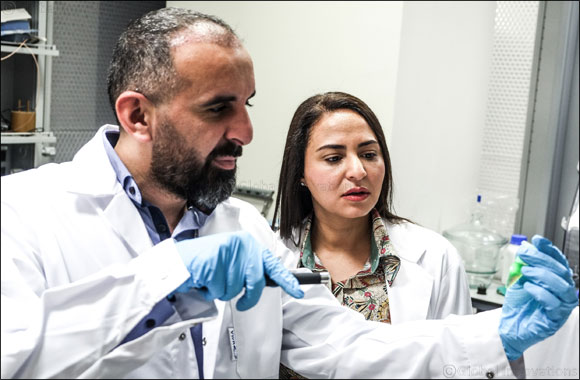
Triphenylphosphine (TTP)-stabilized nanoparticles have the ability to precisely release cancer-fighting drugs in cell cultures and living organisms
Fast facts:
● Gold nanoparticles (AuNPs) are small gold particles with a diameter of 1 to 100 nm, which, once dispersed in water, are also known as colloidal gold. They also absorb light energy and heat.
● Gold nanoparticles are being explored widely for use in high technology applications such as sensory probes, electronic conductors, therapeutic agents, organic photovoltaics, and drug delivery in biological and medical applications.
● Researchers are exploring using gold nanoparticles as a combined drug delivery and hyperthermia agent in order to raise the temperature of malignant cells and cause their destruction.
● Aqueous one pot synthesis of triphenylphosphine-functionalized gold nanoparticles is unprecedented.
Abu Dhabi, UAE – April 6, 2020: A team of NYU Abu Dhabi (NYUAD) researchers developed a new, one-pot synthetic approach to obtain water-stable and “ready to use” gold nanoparticles that can be heated with a simple green laser, improving the gold nanoparticles’ ability to penetrate and destroy malignant cells through hyperthermia and simultaneously releasing chemotherapeutic drugs. The unique design of these nanoparticles reduces the side effects of the drugs, potentially improving patients’ quality of life.
In the paper titled Aqueous Synthesis of Triphenylphosphine-Modified Gold Nanoparticles for Synergistic In Vitro and In Vivo Photo-thermal Chemotherapy, published in Chemistry - A European Journal, NYUAD Research Scientist Farah Benyettou and Associate Professor of Chemistry Ali Trabolsi, in collaboration with Professor of Biology Kirsten Sadler, presented the process of creating triphenylphosphine-functionalized gold nanoparticles by simply heating a solution of the triphenylphosphine gold (I) chloride salt in water under microwave irradiations. Biocompatible gold nanoparticles coated on the surface with triphenylphosphine molecules penetrate cancerous cells in preference. By combining the nanoparticles with heat, the researchers found a dramatically improved cell killing compared with heat or the nanoparticles alone. Combined therapies, and consequently improved cancerous cell killing, were achieved when cancer cells were irradiated with a green laser.
Since nanoparticles are constrained to the area of the cancerous tissue, the heat produced by absorbed laser energy causes the localized temperature to rise and release the drug that kills the cancer cells without damaging the surroundings. Therefore, nanoparticles are actually heating agents and drug delivery systems. The drug-coated particles manifested strong potential to act as an antimetastatic agent by inhibiting adhesion and invasion of cancer cells.
Trabolsi commented, “In addition to being environmentally-conscious and economical, this new approach presents a range of possibilities for the further development of novel phosphine-functionalized nanoparticles.”
“These ‘ready-to-use’ water-soluble nanoparticles possess a programmable anti-cancer drug-releasing ability and pH/photo-thermal dual responsiveness that allow them to leave healthy cells unharmed,” said Benyettou.
Previous Article
New Study Reveals How Too Much Fluoride Causes Defects in Tooth E...
Next Article
Strategic partnership between HBMSU and UNESCO IITE to launch ‘Be...
Related Articles More Education & Learning ›






Most Viewed – Last 30 Days
- From a Pair of Shoes to a New Dubai Property: British Expat Wins Through ‘Win ... [2887-Views]
- Five ways Emirates is helping customers travel with greater confidence... [2163-Views]
- Sheikh Zayed Falcon Release Programme releases 2,400+ falcons in the wild sinc... [1695-Views]
- DSS FINAL SALE BRINGS UP TO 90% OFF ACROSS MORE THAN 500 BRANDS FOR THE FINAL ... [1371-Views]
- e& UAE launches Business Pro AI bundled with Microsoft Copilot at no additiona... [1299-Views]
- e& UAE leads industry transition to 5G-native IoT with successful testing of R... [1171-Views]
- How to Choose the Right Medical Insurance in Dubai Based On Your Lifestyle?... [1113-Views]
- Held under the patronage of His Highness Sheikh Hamdan bin Zayed Al Nahyan Ab... [1074-Views]
- Beautyworld Dubai's 30th Edition Brings Global BeautyIcons Together This Octob... [1050-Views]
- Tadej Pogacar Chases Tour de France–Vuelta a Espana Double... [1015-Views]
- To enhance quality of sports services Ministry of Sports organises the first ... [930-Views]
- LG EMPOWERS DESIGNERS AND VIDEOGRAPHERS WITH NEW ULTRAFINE EVO 6K MONITOR... [849-Views]
- Best Recruitment Agencies in Dubai and Executive Search Firms in the UAE in 20... [804-Views]
- RTA Hosts Microsoft Copilot Day to Enhance Employee Efficiency and Accelerate ... [770-Views]
- ORA Land Launches BluBay with Suryakumar Yadav as Brand Ambassador, Reinforcin... [751-Views]
- ‘A Dubai Invite’ programme concludes following more than 90,000 applications ... [715-Views]
- Your Guide to Winning Big This Summer Through Dubai Summer Surprises... [698-Views]
- Isaac del Toro lands overall title at the Lidl Deutschland Tour... [696-Views]
- Stellar Wine Cellar: Emirates to serve exceptional Champagnes and fine wines o... [693-Views]
- EDGE Debuts Multi-Domain Defence Capabilities at DALO Industry Days 2026... [685-Views]
