
Morta.com Is Bringing Its Property Development Software from the UK to the UAE
Last Update: Wednesday, September 9, 2026 : 20:01 (+4GMT)
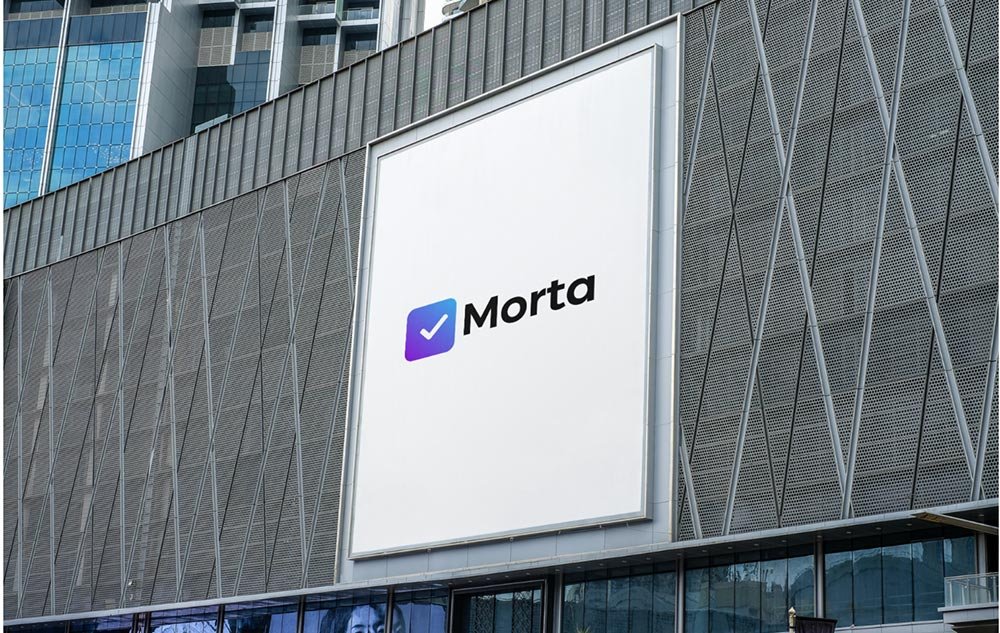
Morta.com built its name by helping UK development businesses run their projects with a firmer grip on the commercial detail. Its move into the UAE follows a straightforward market observation: a country that continues to build at this scale needs technology designed around the developer’s side of the table. The UAE Ministry of Energy and Infrastructure recorded more than 1.2 million buildings in the country in 2022. Behind every completed address is a development process that must be appraised, funded, approved, procured, reported on and delivered.
This is not an argument that the UAE has only recently become a development market. Its built environment has been one of its defining economic and cultural statements for decades. What has changed is the degree to which development businesses are expected to operate with institutional discipline while maintaining the pace that the market demands.
Morta’s expansion into the UAE is therefore about more than entering a new territory. It is about bringing a developer-first operating model, refined in the UK, to a market where the volume of development and the ambition of its participants make that model increasingly relevant.
A UK Development Platform Entering a Market Built at Scale
The UK has given Morta a demanding foundation. Development businesses there work within close commercial scrutiny, lengthy project lifecycles and a landscape where every movement in cost, funding and programme can affect the viability of a scheme. Developers need to hold together the original business case while responding to the practical realities of delivery.
That experience travels well. The UAE has its own commercial structures, regulatory environment and pace, yet the core challenge is recognisable: development leaders need a reliable view of the project they are responsible for. They need to know what has been approved, what has been committed, what remains unresolved and what each decision means for the wider commercial position.
The UAE’s appetite for new development makes this especially pressing. Residential communities, hospitality projects, offices, logistics facilities, mixed-use districts and high-end branded schemes all require a considerable amount of coordination before they become part of the skyline. Their complexity does not vanish because the market moves quickly. In many cases, it becomes more difficult to manage.
This is why Morta is making the UAE a major market for its property development software. The platform is intended for the people who are accountable for the development itself: the businesses making investment decisions, managing budgets, directing procurement, approving changes and reporting to boards, funders and stakeholders.
That emphasis matters because much of the technology used across the built environment was created with a different user in mind. Construction software can be highly effective for site delivery and contractor operations, but a developer has responsibilities that begin well before construction and continue long after a package has been awarded.
The Developer’s Work Begins Before the Site Does
A developer does not start with a programme on site. The work begins with an opportunity that must be tested. Land, costs, revenues, finance, risk and timing need to make sense together before the project becomes a live commitment. Those early assumptions shape the commercial case for the entire development.
Once a scheme progresses, the original assumptions must remain visible. A revised tender, a scope change or a delayed approval can affect the feasibility of the project in ways that are not always apparent from a single report. Teams need a working environment that allows them to trace the connection between an early decision and its later consequences.
This is where a specialist platform becomes useful. Morta brings appraisal and feasibility, budgeting, procurement, cash flow, payment applications, variations, approvals, reporting and project records into a connected development workflow. The point is to retain the commercial thread of the project as it moves through its many stages.
For a growing UAE developer, that can mean the difference between managing projects as separate streams of activity and managing them as a portfolio of commercial commitments. The distinction becomes more important as the business takes on additional schemes, builds larger internal teams and works with a wider circle of external partners.
Morta’s UK experience has been shaped by this reality. The platform has been built around the decisions that determine whether a development business can maintain control as it grows, rather than treating project administration as an afterthought once construction has started.
The Real Demand Is for a Better Operating System
The phrase “ERP for property developers” can sound technical, but the underlying need is simple. Development businesses require a shared operating system for the information that guides their decisions. Finance, commercial, development and delivery teams should be able to work from the same underlying record, even when their responsibilities are different.
A generic ERP may offer broad financial management, but it is unlikely to understand the particular anatomy of a development. A variation is connected to a contract, a scope, a budget and an approval pathway. A payment application has a project history behind it. A procurement decision needs to be understood in relation to both the package being awarded and the commercial plan it affects.
Morta is designed to preserve that context. Instead of forcing teams to translate development activity into a series of disconnected administrative entries, it gives the activity a place within the project’s wider record. That can make information more useful at the moment it is needed, rather than only after someone has spent days preparing a report.
This has particular relevance in the UAE, where developers can be overseeing projects with several entities, international suppliers, substantial capital commitments and varied stakeholder expectations. A business that is moving at speed still needs its information to carry authority. It cannot depend on a handful of people knowing where every detail sits.
The most valuable property development software does not reduce a business to a set of dashboards. It gives the right people a dependable route into the detail behind the dashboard. When a cost moves, an approval is delayed or a procurement decision requires further scrutiny, the team should be able to understand the context without beginning a separate investigation.
From Project Updates to Commercial Intelligence
Many development teams know the monthly reporting cycle well. Updates are gathered, files are checked, figures are reconciled and senior stakeholders receive a view of the project. These reports remain essential, but they can become burdensome when the underlying information is dispersed across spreadsheets, inboxes and document folders.
A connected platform changes the quality of that process. The report can become a reflection of the project record rather than a temporary reconstruction of it. This allows meetings to focus more directly on the judgement required: whether a risk needs action, whether a proposed change is commercially sound or whether the project is still moving in the intended direction.
That is a meaningful shift for senior development teams. Leadership does not need another layer of presentation. It needs a clearer route to the information on which it is expected to make decisions. A platform that supports that route can improve how quickly a business responds without sacrificing the quality of its commercial oversight.
For Morta, this is the practical case for entering the UAE. The market has no shortage of buildings, projects or ambition. What it increasingly requires are systems that can keep the commercial and operational story of those developments intact from the first appraisal to the last handover task.
Generative AI and the New Search for Project Knowledge
The emergence of generative AI has changed how businesses think about software. Its most familiar capabilities involve writing, summarising, interpreting and answering questions. Within property development, that has created a useful possibility: teams may be able to retrieve relevant information from a project record without manually searching through every document and update.
Generative AI responds to a prompt. A user might ask for a summary of recent activity, request an explanation of an outstanding issue or seek the principal points from a project document. The technology can turn a large volume of information into a more accessible starting point for a conversation or decision.
For development businesses, this matters because commercial attention is finite. Directors, project managers and finance teams often need to prepare quickly for meetings where the quality of the discussion depends on their understanding of recent events. A well-designed AI tool can help surface relevant context and reduce the time required to locate it.
Why Context Matters More Than a Clever Answer
An answer can sound convincing while still missing the point. In property development, the important issue is rarely a figure or document in isolation. A cost needs to be considered against the budget, the procurement position, the contractual context and any approval that has already taken place.
That is why property development AI must be connected to a credible system of record. If the underlying information is incomplete, poorly organised or spread across disconnected tools, the AI will inherit those limitations. A more intelligent interface cannot compensate for a weak operational foundation.
Morta’s approach places the project record at the centre. This creates the conditions for AI to become genuinely helpful: information has a clear home, activity can be linked to the relevant project process and users can ask better questions because the context has been retained.
For UAE development businesses, that could be a significant advantage. The faster the market moves, the more difficult it becomes to rely on informal knowledge held by a small number of individuals. A structured platform gives the organisation a stronger institutional memory, even as teams, projects and external relationships evolve.
Agentic AI Could Change How Development Work Moves Forward
Generative AI helps people understand and create information. Agentic AI is concerned with what happens next. It is designed to work towards an objective through a sequence of actions, following defined rules and operating within the permissions set by the business.
In property development, this has the potential to change workflow in a more profound way. Much of a project consists of linked responsibilities that require follow-through. An item is raised, information is reviewed, a decision is required, an approval is recorded and a task is progressed. The difficulty is often not identifying the first step. It is maintaining the connection between every step that follows.
An agentic system could support teams by monitoring defined conditions within a project. It might identify an approval that needs attention, assemble the supporting information for review, prompt the responsible person or prepare a draft task based on the established workflow. The scope of its role would be set by the organisation, with clear boundaries around what it can prepare, recommend or progress.
The Future Workflow Will Reward Well-Run Businesses
Agentic AI will be most valuable to businesses that already take their operating discipline seriously. It requires clear processes, structured information and thoughtful governance. Developers will need to decide where automation is appropriate, when human approval is mandatory and how sensitive project information should be managed.
These are not abstract questions. They are the practical conditions that determine whether AI becomes a useful part of a development business. A system should make responsibilities easier to understand and decisions easier to trace, particularly when projects involve substantial financial commitments and several stakeholders.
Morta’s arrival in the UAE sits within that wider shift. The company is bringing a platform shaped by the demands of UK development businesses to a market where the scale of new development makes connected commercial control increasingly necessary.
A Serious Platform for a Serious Development Market
The UAE’s construction and property sectors are often described through spectacle, but the enduring work takes place in the discipline behind the projects. Successful development depends on the ability to connect ambition with a workable business case, a managed budget, sound procurement decisions and a clear record of what has been approved.
That is the gap Morta is seeking to address. Its property development software is designed for developers who need their project information to support the decisions that actually govern a scheme, rather than simply store evidence of those decisions after the fact.
As AI for property developers becomes part of everyday practice, the strength of the underlying platform will matter even more. Generative AI can make information easier to retrieve, while agentic AI can help teams maintain momentum across routine workflows. Both depend on the quality and structure of the data beneath them.
Morta’s UK foundation and UAE expansion reflect a clear belief: the next generation of development businesses will need more than isolated construction software or generic business systems. They will need technology that understands how developers work and helps them remain commercially informed as their projects become more ambitious.
For developers building in the UAE, the opportunity is to establish that foundation before complexity becomes difficult to manage. To see how Morta.com can support your development business, you can most definitely book a demo with Morta.





- From a Pair of Shoes to a New Dubai Property: British Expat Wins Through ‘Win ... [2940-Views]
- Five ways Emirates is helping customers travel with greater confidence... [2210-Views]
- UAQ Free Zone and Port City Colombo Sign Agreement to Promote Investment ... [1832-Views]
- Sheikh Zayed Falcon Release Programme releases 2,400+ falcons in the wild sinc... [1754-Views]
- DSS FINAL SALE BRINGS UP TO 90% OFF ACROSS MORE THAN 500 BRANDS FOR THE FINAL ... [1450-Views]
- e& UAE launches Business Pro AI bundled with Microsoft Copilot at no additiona... [1352-Views]
- Environment Agency - Abu Dhabi partners with Japan’s Suwa Falconry Preservatio... [1313-Views]
- e& UAE leads industry transition to 5G-native IoT with successful testing of R... [1214-Views]
- President of the Comoros H.E. Azali Assoumani inaugurates UAE-financed solar p... [1179-Views]
- How to Choose the Right Medical Insurance in Dubai Based On Your Lifestyle?... [1169-Views]
- Held under the patronage of His Highness Sheikh Hamdan bin Zayed Al Nahyan Ab... [1121-Views]
- Beautyworld Dubai's 30th Edition Brings Global BeautyIcons Together This Octob... [1111-Views]
- Tadej Pogacar Chases Tour de France–Vuelta a Espana Double... [1062-Views]
- To enhance quality of sports services Ministry of Sports organises the first ... [975-Views]
- "A Dubai Invite" programme concludes following more than 90,000 applications f... [961-Views]
- Stellar Wine Cellar: Emirates to serve exceptional Champagnes and fine wines o... [943-Views]
- Best Recruitment Agencies in Dubai and Executive Search Firms in the UAE in 20... [903-Views]
- LG EMPOWERS DESIGNERS AND VIDEOGRAPHERS WITH NEW ULTRAFINE EVO 6K MONITOR... [902-Views]
- Al Habtoor Motors launches ‘Back to School with Mitsubishi’ offers with Buy No... [857-Views]
- In a first-of-its-kind experience for a private Emirati company Hattlan Media... [833-Views]
