
The New Era of Majlis Design: Blending European Crystal Heritage with Arabian Opulence.
Last Update: Sunday, December 7, 2025 : 09:50 (+4GMT)
In different Gulf and Middle Eastern countries, the home majlis is the true heart of the house, not just a living room in the European sense. This is where families gather, where guests are warmly welcomed, and where important business matters and professional discussions take place. For this reason, when designing such spaces in today’s homes, decorators and planners should carefully consider every aspect: ensuring everyday comfort, incorporating refined aesthetics, reflecting the owners’ taste, preserving traditional decorative elements, and, of course, highlighting respect and hospitality.
No less challenging is carefully developing a luxury majlis design project that takes into account both modernity and refined detailing. And that’s why we’ve gathered all the key trends and luxury tableware Dubai, along with expert recommendations on exclusive and high-end décor pieces.
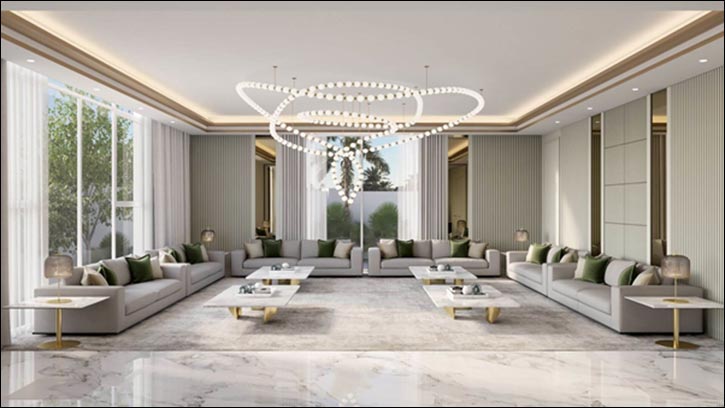
The Concept of Luxury Majlis Design
We’d like to thank the MDMAISON team, who specialize in consulting, developing, and supporting various luxury interior projects—including in the GCC region—for sharing info about current trends and the types of majlis projects most commonly requested today. According to their insights, the standard list of must-haves now extends beyond the traditional decor elements like ornate rugs, cushions, incense, and Arabic coffee. Now it's all about grand-scale planning—not just a spacious room, but an overwhelmingly large one, with a trend for high ceilings contrasted by the ever-present low, elegantly shaped sofas. The décor remains incredibly expensive, but slightly more restrained: rich carpets, though not spread as extensively; carved wood, natural leather, premium textiles, crystal accents, and metals—not just gold, but silver too. Timeless details like refined mosaics, Arabic calligraphy, and traditional lanterns are still here, now interpreted in more artistic and sophisticated forms.
Popular Luxury Majlis Designs
Within the GCC region, there’s a notable shift toward high-end interior experimentation, particularly through the modernization of traditional cultural motifs to reflect current design sensibilities.
From what we’ve seen, decorators tend to rely on a few key styles that show up again and again in luxury majlis designs.
- Traditional or Classic Arabic. This style features traditional Arabic furniture, patterns, arches, carvings, and decorative elements.
- Modern Majlis or Contemporary Arabic. A very popular style today. It’s an ultra-modern, practical, and stylish blend of Arabic spirit and contemporary design.
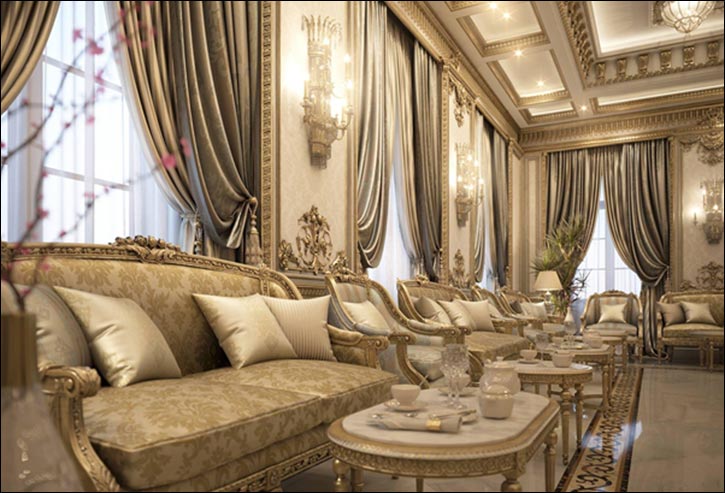
- Luxury Classic-European (Baroque, Art Deco, elegant classics). Designers are experimenting with this style in majlis settings, creating truly luxurious and memorable projects.
- Modern Moroccan or North-African. This style is fully immersed in bold Eastern character—Arabic patterns, ornamental motifs, decorative accents, Eastern furniture, and the ambiance of a true “Arabian fairytale.”
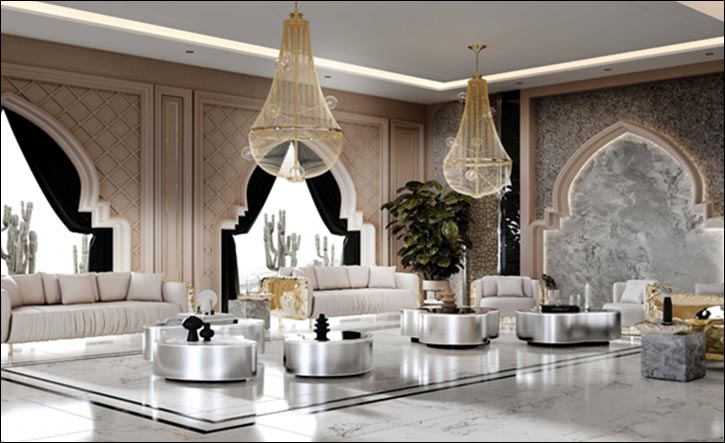
Crystal in Luxury Majlis
Today, we’re focusing on something truly timeless—crystal glass. Previously uncommon in Arab households, it is now becoming more relevant, as modern expectations emphasize the importance of status symbols recognized not only in the East but internationally. That’s why we now see crystal chandeliers, wall sconces, pendants, glassware for serving, luxury barware, vases, and decorative objects appearing in interiors. But of course, the majlis must still reflect its traditional cultural roots, so crystal is used in moderation and, unlike in European or American interiors, applied selectively and as an accent.
Crystal Glass for Traditional and Classic Arabic
In a Traditional Arabic or Islamic majlis interior, crystal remains a solitary but very powerful accent. Its main role isn’t to dominate the space, but to add a special touch of luxury. Typically, these are statement chandeliers or pendant fixtures, and occasionally wall sconces or decorative table bases, all reflecting traditional Eastern design elements like geometry, symmetry, and elegant silhouettes.
What’s worth checking out:
- Krystal Luxury Crystal Chandelier — a sleek yet luxurious chandelier
- Romantic by Italamp: a grand Swarovski-studded chandelier ideal for large majlis spaces with high ceilings
- Marrakech Chandelier in Gold & Clear, merging Moroccan and Arabic stylistic principles
- Mounted Dubai Chandeliers Silver & Gold — modern Eastern classic with a fresh twist
- Baccarat Mille Nuits Chandelier — fits naturally into the interior
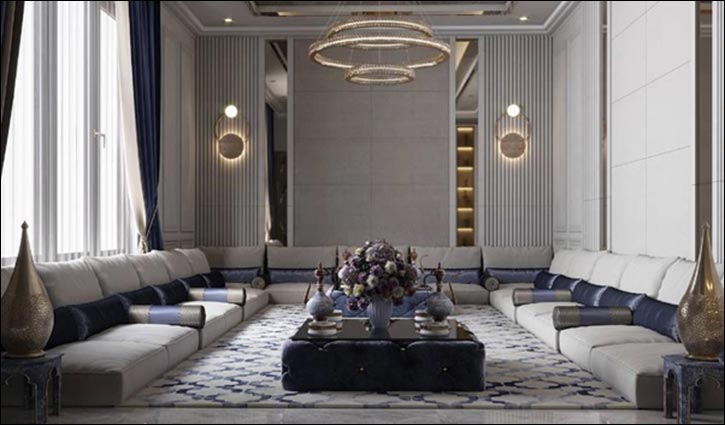
Crystal for Modern Majlis and Contemporary Arabic
When it comes to modern Majlis and Contemporary Arabic interiors, crystal and glass pieces are definitely used—but the selection is very delicate. Designers frequently opt for a striking chandelier or pendant fixture featuring crystal or glass details and a substantial presence. You can spot glass vases, decorative bowls, and glassware.
Some great pieces to go for:
- Baccarat Eye Rectangular Vase
- Lalique Oceania Crystal Vase
- Harlem Crystal Vase by Reflections Copenhagen
- Lalique Champs-Élysées Bowl
- Waterford Lismore Diamond Bowl
- Casa Padrino Designer Crystal Glass Bowl
Crystal for Luxury Classic and Classic-European
Baroque, Art Deco, and elegant classic styles in Majlis design are often accompanied by wall sconces with crystal drops, refined vases, decorative bowls, and glassware for serving—like goblets, pitchers, and decanters, especially when the space includes a tea table or coffee corner. All of this should follow a cohesive style: smooth shapes, delicate carving, clear or lightly tinted crystal, sometimes with silver or gold edging.
What we’d recommend for your space:
- Baccarat Rectangular Crystal Vase
- Lalique Dampierre Vase
- Val Saint Lambert Vintage Crystal Vase
- Baccarat Louxor Vase
- Saint-Louis Roemer Crystal Wine Glasses are perfect for a luxe bar nook
- Josef Lobmeyr Vintage Crystal Sherry Glasses Set, an exceptional addition for formal service
Crystal in Moroccan and North-African Design
In Moroccan and North-African style, crystal is not a frequent guest. But if you decide to include it as an accessory, it should be done carefully and with great precision. The foundation of this type of interior lies in metal, ceramics, carvings, mosaics, and textiles, so any large-scale glass must be carefully integrated to avoid disrupting the atmosphere. Elegant pieces are a great fit for serving coffee and tea, sweets and dates, fruits; for decorative arrangements; or as a contrasting element against soft textiles, rugs, mosaics, and wooden details.
What can be used:
- Baccarat Coffret Gobelets for serving Arabic-style coffee
- Saint-Louis Verre Coffret Goblets for coffee, tea, soft drinks
- Casa Padrino Luxury Crystal Glass Bowl for sweets, dried fruits, or small snacks
- Baccarat Swing Small Bowl for serving nuts, candies, or fruits in a guest area
- Lalique Crystal Nemours Bowl for fruits or desserts
So, What’s the Bottom Line?
To wrap up our overview, we’d like to leave on a joyful note—mainly because Arab interiors have truly learned how to incorporate European luxury with care, without losing their unique character.
Tolerance and careful integration—that’s what you need to apply to avoid overdoing it and ruining the entire concept. That’s why you should always turn to experienced decorators and design planners to get a majlis project perfected down to the finest detail.
- Bridal Season Is Officialy Open with Benefit Cosmetics!... [2506-Views]
- Dubai Summer Surprises 2026 Unveils an Action-Packed Calendar of Shopping, Din... [2081-Views]
- Joyalukkas Strengthens US Footprint with 8th Showroom in Iselin, New Jersey... [2074-Views]
- Mercato Takes Media on a Magical Summer Journey with The Grand Comedy Circus a... [1624-Views]
- Group-IB launches Purple Teaming service to close the gap between security inv... [1286-Views]
- Dubai Gears Up for a Spectacular Start to 29th Dubai Summer Surprises with Liv... [1128-Views]
- Government of Fujairah Signs Agreement to Purchase Gasoline Production from Et... [969-Views]
- Global Talent Attraction and Retention Committee Convenes Tenth Meeting to Rev... [933-Views]
- MAIR Group and Makani Real Estate Announce Mall of Al Ain Redevelopment and Ex... [915-Views]
- Schneider Electric joins the World Economic Forum Lighthouse Operating System ... [902-Views]
- EGA wins the AI Vision and Strategy Award at the 2026 Manufacturing Leadership... [900-Views]
- EGA inaugurates UAE's largest aluminium recycling plant... [839-Views]
- Kia introduces PV5 as its first Platform Beyond Vehicle (PBV) model in Middle ... [836-Views]
- Spain Defeats Argentina to Claim Second FIFA World Cup Title... [830-Views]
- G-SHOCK MTG-B4000BD-1A: A New Language of Structural Beauty... [826-Views]
- The New SHEGLAM Lashlighter Root-Up Lash Primer Gets to the Root of the Matter... [824-Views]
- Dubai Summer Surprises: Shop, Save, and Win as the Great Dubai Summer Sale Arr... [814-Views]
- Dubai Municipality and Enviroserve sign strategic agreement to enhance e-waste... [781-Views]
- Commercial Bank of Dubai prices USD 550 million Additional Tier 1 perpetual no... [755-Views]
- Standard Chartered: "UAE Business Activity to Accelerate in Q3 2026"... [734-Views]
