
AI Breakthrough Enables Refineries to Self-diagnose Fouling to Reduce CO2 Emissions
Last Update: Monday, January 15, 2024 : 15:06 (+4GMT)
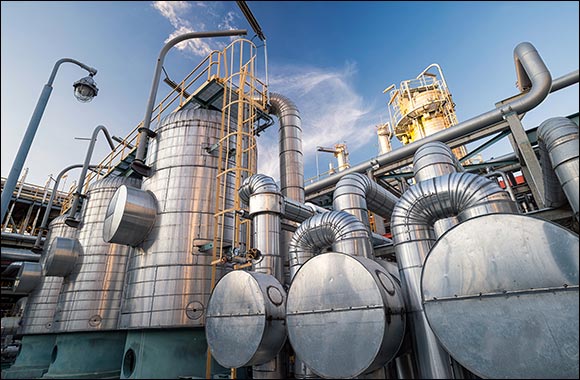
Energy efficiency technology can help refineries abate up to 400 million tonnes of CO2 per year
Dubai, UAE – 15 January 2024: DecarbonX has concluded groundbreaking research into the use of AI in industry, bringing a new level of autonomy to industrial processes and enabling critical equipment to self-diagnose issues. The milestone marks a major shift in the efficient monitoring and maintenance of refinery infrastructure, empowering the petroleum industry to reduce emissions.
HEX Care, a DecarbonX innovation, utilises AI to enable heat exchangers to autonomously identify issues and then verbally communicate with staff at petrochemical plants, alerting them to maintenance needs. Integrating the technology into heat exchangers, a vital cog in petrochemical plants, will ensure the monitoring of fouling is proactive, rather than reactive. The AI software allows heat exchangers to communicate regular health updates to engineers, processing masses of data to self-diagnose fouling, de-risking operations and streamlining maintenance.
Eduard Cherednik, Executive Director of the DecarbonX program, highlighted, “Our intelligent heat exchangers have shown remarkable capability to communicate with plant and laboratory personnel about their health, effectively discussing advanced maintenance strategies and operational adjustments. This is a significant step towards realizing the full potential of autonomous production, where equipment actively engages in its upkeep and seamlessly interacts with human teams.”
The experiment used data taken from existing refineries, combined with advanced AI software, to simulate the ability for heat exchangers to communicate between themselves and self-diagnose maintenance issues. In 2024, DecarbonX plans to scale this trial and conduct a full pilot project. Utilising the findings from the pilot project, DecarbonX aims to integrate the technology into an existing petrochemical plant by the end of 2024.
The process ensures that fouling can be prevented quickly and with minimal operational disruption. Fouling, where the build-up of deposits impacts heat exchangers efficiency, and leads to increased energy consumption, is a significant contributor to global CO2 emissions. This new process further enhances the broader adoption of machine intelligence and autonomy in industrial operations, showcasing the positive impact AI can have in increasing operational efficiency, and ultimately, reducing harmful emissions.
The announcement comes as the world seeks to rapidly accelerate emissions reductions in vital economic sectors to meet net zero targets. At COP28, held in Dubai, global leaders agreed on the need for urgent action over the next decade. The summit also recognised the need to reduce global emissions by 43% by 2030. However, a recent report by the UN found the world is significantly off-track, with emissions set to fall by just 2% by 2030, below 2019 levels. This only heightens the necessity of finding efficient and easily integrated decarbonising technologies that can have an immediate impact on emissions from industrial practices. DecarbonX, an Angara initiative, has been leading the call for urgent action from the petroleum industry to tackle the issue of fouling.
Alex de Valukhoff, Chief Executive Officer at Angara, said: “Embracing advances in AI will streamline industrial practices and help make heavy industry fit for purpose in an era of decarbonisation. Self-diagnosing heat exchangers are just the beginning, the petroleum industry must do more to reduce emissions and innovation must be a key part in the drive to decarbonise. With less than a year until the next global climate conference, COP29, I’m conscious of the sheer scale of emissions that could be abated in that time by refineries simply adopting energy efficiency technology. Our analysis shows up to 400 million of tonnes of CO2 can be abated per year, globally. Now is the time to take act.”





- Bridal Season Is Officialy Open with Benefit Cosmetics!... [2454-Views]
- Dubai Summer Surprises 2026 Unveils an Action-Packed Calendar of Shopping, Din... [1997-Views]
- Joyalukkas Strengthens US Footprint with 8th Showroom in Iselin, New Jersey... [1949-Views]
- Malabar Gold & Diamonds continues its expansion in North America: Launches 8th... [1807-Views]
- Mercato Takes Media on a Magical Summer Journey with The Grand Comedy Circus a... [1562-Views]
- Hamdan bin Zayed chairs 2nd Environment Agency – Abu Dhabi board meeting in 20... [1457-Views]
- Group-IB launches Purple Teaming service to close the gap between security inv... [1163-Views]
- First winner of 'Win Your Home in Dubai' initiative announced as citywide home... [1118-Views]
- Dubai Gears Up for a Spectacular Start to 29th Dubai Summer Surprises with Liv... [1073-Views]
- Government of Fujairah Signs Agreement to Purchase Gasoline Production from Et... [947-Views]
- Global Talent Attraction and Retention Committee Convenes Tenth Meeting to Rev... [914-Views]
- MAIR Group and Makani Real Estate Announce Mall of Al Ain Redevelopment and Ex... [887-Views]
- Schneider Electric joins the World Economic Forum Lighthouse Operating System ... [885-Views]
- EGA wins the AI Vision and Strategy Award at the 2026 Manufacturing Leadership... [876-Views]
- EGA inaugurates UAE's largest aluminium recycling plant... [823-Views]
- Kia introduces PV5 as its first Platform Beyond Vehicle (PBV) model in Middle ... [817-Views]
- G-SHOCK MTG-B4000BD-1A: A New Language of Structural Beauty... [810-Views]
- Dubai Summer Surprises: Shop, Save, and Win as the Great Dubai Summer Sale Arr... [797-Views]
- The New SHEGLAM Lashlighter Root-Up Lash Primer Gets to the Root of the Matter... [796-Views]
- New economic licences in Abu Dhabi increase 21% in Q1 2026... [788-Views]
