
A Chat With Mr. Hamid Rashid, Founder & CEO of Finterra.
Last Update: Saturday, May 5, 2018 : 09:44 (+4GMT)
Dubai, UAE, May 05, 2018:
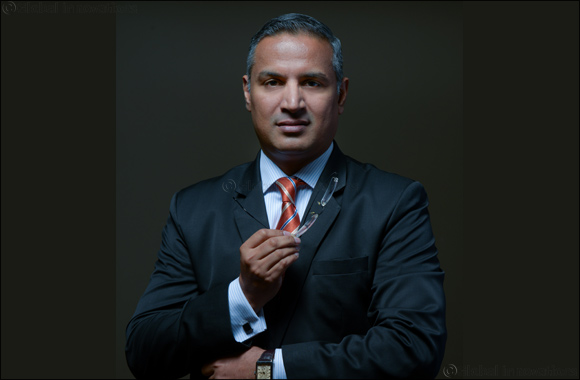
1. Please give us a brief on Mr. Hamid, his visions and mission with introduction to Blockchain in the world Hamid Rashid Founder & CEO of Finterra Hamid, a hands on Strategic Visionary brings his wealth of experience and knowledge from Hewlett Packard, Petronas and U&Me. He creates brands that deliver stakeholders strong tangible results.
He has over fifteen years of professional experience, Consulting in Enterprise Software Business Management and Business Development experience in the B2B and B2C industry sectors, as Senior Business Manager. He has been closely involved in the different facets of Enterprise Business Management, specifically– Strategic Business Planning, Strategic Account Business Development, and Partner Ecosystem Management.
About Finterra
Finterra Foundation is an organization that provides a “Social Solution for blockchain”. Through groundbreaking innovation, Finterra Blockchain technology enables real world solutions that address the needs of global industries. Finterra’s award winning Blockchain technology is recognized by the United Nations and Global Regulators, as the standard for social crowdfunding for the development of Endowment(Waqf), e-commerce and money services. Finterra is the benchmark for next generation Blockchain technology with real world applications.
Vision
Finterra envisions to be a global leader in next generation of Fintech, providing a total “Social Solution for Blockchain”.
Mission
Finterra is committed to the continuous growth of our community and the technical advancement of the Finterra Blockchain.
2. What are the challenges that are anticipated with a global acceptance for Waqf
Aside from the legalities and compliance with endowments, the biggest issue is actualizing them and generating income. These assets are federally protected meaning they cannot be liquidated but this poses a problem because it makes raising development capital difficult. Financial institutions find loans on these assets too risky and therefore will not capitalize to develop an endowed property. A problem that has been plaguing the World Bank for the last 100 years.
3. How different is the Middle East in terms of introducing Waqf – advantage or a challenge
Dubai is a budding sphere of opportunity that encompasses the fast-growing Middle East, Africa and South Asia (MEASA) markets, which are undergoing substantial demographic shifts and have younger, more technologically savvy populations. The pace of fintech innovation in the Gulf Cooperation Council (GCC) has been extremely quick over the past few years but still requires more work on the ground to truly revolutionise major industries.
Dubai’s government initiative is bringing together public and private sectors to identify test cases for new blockchain business models and has led to a huge swell of investment in the blockchain domain. The overall aim is to record all government transactions on the blockchain — an initiative that could save of over $1.5 billion [Dh5.5 billion] and more than 25 million hours in lost productivity.
It is for this reason, Finterra is organising the second leg of the International Waqf & Blockchain Forum 2018 in Dubai. Given the rise in blockchain demand all over the middle east, Finterra aims to showcase new opportunities and possibilities available through the use of blockchain technology to facilitate in the development and sustainability of Waqf.
4. Our readers would like to know the response from a previously held forum of this nature internationally
The one-day international forum in Malaysia was the largest of its kind, that saw over 600 delegates that comprised of multiple fields and backgrounds such as academicians, NGOs, practitioners, regulators, government officials, corporate technology companies, financial institutions, students as well as Malaysian and International dignitaries.
IWBF 2018 saw the official signing of five key Memoranda of Understanding (MOU) agreements between Finterra Technologies and IIUM, The Haj Committee of Rajasthan, CLMV Holding (Cambodia) Co LTD, Myashi and NanoMalaysia Bhd.
Dignitaries and industry experts arrived from all over the region– namely Singapore, Hong Kong, China, India, Pakistan, Indonesia, South Africa, Australia, Iraq, Iran and Kuwait just to name a few.
5. Islamic endowments are believed to hold large portfolios of real estate, commercial businesses and other assets, with an estimate of as much as $1 trillion of assets held in waqf globally – Please can you explain further
For decades, the development and administration of Waqf assets has been a challenge in many countries. Billions of dollars’ worth of waqf assets are available worldwide which could be used to alleviate poverty, but which are simply not being utilised to their fullest potential (if at all). To put things in perspective, in 2010 Ernst & Young estimated the global Waqf sector to be worth over US$105 billion. Although many of these assets are donated and managed privately, making it almost impossible to obtain an accurate total figure, it is suggested that the real value of the industry could be considerably larger. Informal estimates by experts suggest that waqf assets could be as high as SAR1 trillion (US$266.6 billion) in Saudi Arabia alone, US$82 Egypt while in Malaysia, waqf assets have been estimated at RM1 trillion (US$325.4 billion).
While the total global waqf assets could be worth over US$1 trillion, many of these assets are poorly managed, falling into disrepair, or earn little return. Hence, with the advent and growth of blockchain technology, there is renewed hope and optimism amongst administrators, industry experts and scholars alike that a solution could be found utilising blockchain technology in overcoming these challenges.
6. What are the potential projects planned as a part of Waqf and Blockchain
The use of blockchain could address this by tracking each contract electronically across the lifespan of the investment. A potential waqf project being currently studied involves the redevelopment of a school in Jakarta, Indonesia, into a commercially-viable property.
We’re the next generation of blockchain. For the first time, we are a social solution on blockchain. Every other blockchain has an element of greed to it. We, on the other hand, are a non-profit blockchain entity. Our goal is simply to help.





- From a Pair of Shoes to a New Dubai Property: British Expat Wins Through ‘Win ... [3068-Views]
- UAQ Free Zone and Port City Colombo Sign Agreement to Promote Investment ... [2040-Views]
- DSS FINAL SALE BRINGS UP TO 90% OFF ACROSS MORE THAN 500 BRANDS FOR THE FINAL ... [1630-Views]
- President of the Comoros H.E. Azali Assoumani inaugurates UAE-financed solar p... [1609-Views]
- Environment Agency - Abu Dhabi partners with Japan’s Suwa Falconry Preservatio... [1575-Views]
- e& UAE launches Business Pro AI bundled with Microsoft Copilot at no additiona... [1468-Views]
- In a first-of-its-kind experience for a private Emirati company Hattlan Media... [1217-Views]
- "A Dubai Invite" programme concludes following more than 90,000 applications f... [1160-Views]
- President of Senegal Receives HE Al Zeyoudi in Dakar to Discuss Expanding Trad... [1157-Views]
- Al Habtoor Motors launches ‘Back to School with Mitsubishi’ offers with Buy No... [1121-Views]
- ‘Win Your Home in Dubai’ Concludes Landmark Citywide Initiative, Driving More ... [1106-Views]
- Stellar Wine Cellar: Emirates to serve exceptional Champagnes and fine wines o... [1089-Views]
- Salik Renews Strategic Partnership for Five Years to Support Tolling System an... [1067-Views]
- Abu Dhabi Student’s AI Triage Platform That Guides Patients to Right Care Wins... [942-Views]
- Maserati presents "Luxury, every day": the new campaign that celebrates luxury... [911-Views]
- Schneider Electric Concludes Innovation Summit Middle East and Africa 2026 in ... [896-Views]
- Emirates Skywards doubles the Miles on Emirates and flydubai flights... [847-Views]
- Isaac del Toro lands overall title at the Lidl Deutschland Tour... [841-Views]
- Benoît Cosnefroy powers to thrilling victory at the Coppa Sabatini... [835-Views]
- RANGE ROVER ELECTRIC: A NEW ERA FOR THE ORIGINAL LUXURY SUV... [811-Views]
