
Innovative Microcoil Procedure in Hybrid Operating Room Shows Promise for Early-Stage Lung Cancer
Last Update: Monday, September 17, 2018 : 10:52 (+4GMT)

Procedure could help doctors treat disease before it spreads – without drastic surgery
Dubai, UAE, September 17, 2018: A new minimally invasive surgery could provide a breakthrough in treating early-stage lung cancer, based on a review of some of the first patients to receive the procedure.
Currently performed at just a handful of medical centers internationally, ‘microcoil localization’ allows doctors to pinpoint and remove tiny nodules in the lungs without damaging additional healthy tissue.
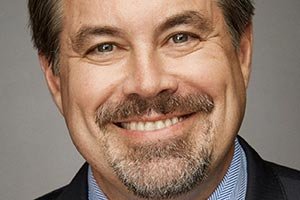
“Rather than cutting out an entire lobe, or potentially even an entire lung, we can just take out a small bit of tissue,” said Jason Lempel, M.D., a thoracic radiologist at Cleveland Clinic in the United States. “We’re able to treat patients with early-stage lung cancers quickly and thus decrease the chance of the cancer spreading.”
Cleveland Clinic is one of a handful of medical centers to offer the surgery. A review of the Cleveland Clinic team’s first 20 cases using microcoil localization has revealed a 100 percent success rate in retrieving the target lesion with clear margins, meaning no cancer cells were detected at the outer edge of the removed tissue.
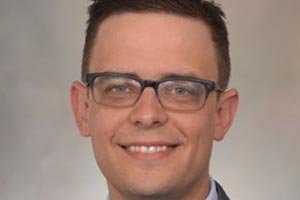
David Sherman is one of the patients to receive the treatment. Dr. Lempel and colleague Daniel Raymond, M.D., a thoracic surgeon, led a team that performed the pioneering procedure on the 70-year-old lifelong non-smoker.
“Never in my life did I ever think I could get lung cancer. I never even touched a cigarette,” said Sherman. “But when they found the lesions, I wanted to know if I had gotten cancer. And if I did, I wanted to get it out of me before it spread.”
When potentially cancerous small nodules or lesions are detected in the lungs, the typical approach is to monitor the situation with annual computed tomography (CT) scans. If any progression in the growths’ shape or size is detected, physicians can take proactive steps, including lobectomy (partial removal of the lung), radiation or chemotherapy, should they develop into cancer.
For Sherman, a survivor of prostate cancer, this ‘watch and wait’ approach just wasn’t an option. He had seen both of his parents die from lung cancer, and despite being a non-smoker, he was anxious for answers.
Microcoil localization offered an alternative. The two-stage procedure typically proceeds in the following manner: after the patient goes to sleep in the operating room, a radiologist, using the hybrid operating room CT scanner and its advanced software capabilities, inserts a needle pre-loaded with a soft, fiber-coated platinum thread through the chest wall, then through the lung and finally, into the target nodule. This coil is carefully anchored to the nodule before the needle is removed.
Using video-assisted thoracoscopic technology (VATS), a thoracic surgeon locates the coil on the membrane around the lungs – the pleural surface – and carefully resects it along with the wedge of tissue containing the small nodule or lesion. The team can then instantly examine the tissue, make a diagnosis and, if necessary, perform further surgical treatment.
Dr. Raymond is optimistic that microcoil localization may one day vastly reduce the need for lobectomy, a surgical procedure in which a much larger section of the lung tissue is removed.
“Eighty-five percent of lung cancer patients present with stage 4 disease, where the (cancer) has spread to the bone or brain,” he said. “If we can detect these patients earlier with CT screening and use microcoil techniques to treat patients sooner, we’re going to be able to treat many more patients and save a lot of lives in the process.”
In Sherman’s case, the team discovered one of the nodules they removed was a very early stage lung cancer. With all the cancerous tissue removed at this early stage, doctors believe he has a 90 percent chance of survival over a five-year period.
“They found I had lung cancer, they took it out, and I never even had any pain,” he recalled. “Now, I have no trouble breathing. I’m good to go!”




- From a Pair of Shoes to a New Dubai Property: British Expat Wins Through ‘Win ... [2947-Views]
- Five ways Emirates is helping customers travel with greater confidence... [2218-Views]
- UAQ Free Zone and Port City Colombo Sign Agreement to Promote Investment ... [1851-Views]
- Sheikh Zayed Falcon Release Programme releases 2,400+ falcons in the wild sinc... [1762-Views]
- DSS FINAL SALE BRINGS UP TO 90% OFF ACROSS MORE THAN 500 BRANDS FOR THE FINAL ... [1467-Views]
- e& UAE launches Business Pro AI bundled with Microsoft Copilot at no additiona... [1358-Views]
- Environment Agency - Abu Dhabi partners with Japan’s Suwa Falconry Preservatio... [1341-Views]
- President of the Comoros H.E. Azali Assoumani inaugurates UAE-financed solar p... [1289-Views]
- e& UAE leads industry transition to 5G-native IoT with successful testing of R... [1221-Views]
- How to Choose the Right Medical Insurance in Dubai Based On Your Lifestyle?... [1178-Views]
- Held under the patronage of His Highness Sheikh Hamdan bin Zayed Al Nahyan Ab... [1125-Views]
- Beautyworld Dubai's 30th Edition Brings Global BeautyIcons Together This Octob... [1116-Views]
- Tadej Pogacar Chases Tour de France–Vuelta a Espana Double... [1068-Views]
- To enhance quality of sports services Ministry of Sports organises the first ... [980-Views]
- "A Dubai Invite" programme concludes following more than 90,000 applications f... [971-Views]
- Stellar Wine Cellar: Emirates to serve exceptional Champagnes and fine wines o... [953-Views]
- LG EMPOWERS DESIGNERS AND VIDEOGRAPHERS WITH NEW ULTRAFINE EVO 6K MONITOR... [908-Views]
- In a first-of-its-kind experience for a private Emirati company Hattlan Media... [880-Views]
- Al Habtoor Motors launches ‘Back to School with Mitsubishi’ offers with Buy No... [876-Views]
- ORA Land Launches BluBay with Suryakumar Yadav as Brand Ambassador, Reinforcin... [801-Views]
