
WFP Ramps Up Support to Yemen's Famine Risk Areas
Last Update: Tuesday, May 25, 2021 : 09:38 (+4GMT)
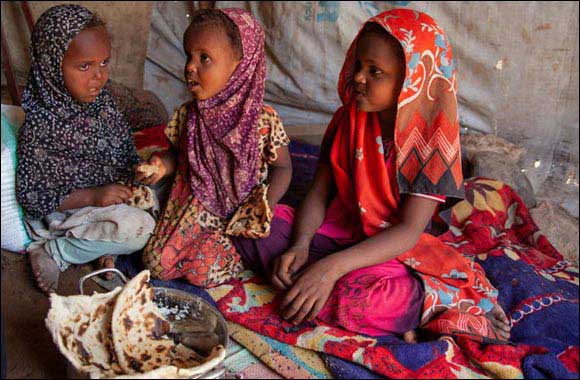
May 25, 2021: The United Nations World Food Programme (WFP) is increasing the level of food assistance in Yemen’s worst hunger hotspots in an effort to prevent a devastating famine. But the agency’s ability to sustain the response to the end of the year remains uncertain.
“The continued fragility in Yemen, compounded by the persistent driving factors of food insecurity has left Yemen acutely vulnerable to worsening levels of hunger – and famine conditions,” said Laurent Bukera, WFP Country Director for Yemen. “Escalating conflict, economic decline, rising global commodity prices and COVID-19 have all contributed to an alarming increase in acute hunger over the last year.”
Nearly 50,000 people in Yemen are already living in famine-like conditions and 5 million people are in immediate danger. A child dies every 10 minutes of preventable diseases such as diarrhoea, malnutrition and respiratory tract infections.
Responding to these acute needs, WFP resumed monthly distributions to 350,000 people in 11 districts facing famine-like conditions (IPC5) in February.
In April and May this year, after new funds were confirmed, WFP began increasing assistance to nearly 6 million people in the nine governorates with the highest rates of ‘emergency’ food insecurity (IPC4): Hajjah, Al Jawf, Amran, Al Hodeidah, Raymah, Al Mahwit, Sa’ada, Dhamar and Taiz. From June, these people will again receive the full ration every month.
WFP supports a total of 12.9 million people with food assistance in Yemen, prioritising areas with the highest rates of food insecurity and providing rapid support to families displaced by conflict, such as in the Marib governorate. But in April 2020, in a challenging operating environment and facing reduced funding, WFP was forced to stop providing assistance every month, and instead provide it every two months, in the northern areas of Yemen.
This year, donors have so far stepped up with nearly $947 million for WFP’s famine prevention effort in Yemen, including large-scale support from the US, the Kingdom of Saudi Arabia, the United Arab Emirates, Germany and European Union. WFP’s food security monitoring, which tracks food consumption, dietary diversity and food-related coping strategies, will soon show the impact of the gradual scale up of assistance, as seen following the significant increase of assistance in 2019 when famine last threatened.
“We will start seeing the impact in the coming months, but initial gains will be fragile”, warned Bukera, “WFP’s ability to maintain this level of response until the end of the year hangs in the balance. Sustained, predictable and flexible funding is required immediately, otherwise we will see any progress undone and needs rapidly rise in what is an unpredictable and challenging operational environment”.
Hunger has increased in Yemen as the conflict has escalated, displacing families for the third or even fourth time as the war grinds into its seventh year. Rising food prices – up to 200 percent above pre-war levels – have made food unaffordable for millions. On top of this, a deadly second wave of COVID-19 is sweeping across Yemen and the healthcare system is unable to cope.
As the UN Security Council’s Resolution 2417 – passed three years ago this month – makes clear, the corrosive cycle of hunger and conflict means that peace will be the only lasting solution to Yemen’s hunger crisis. Until that day, humanitarian assistance is vital and the consequences of another funding shortfall would be devastating for Yemenis.






- From a Pair of Shoes to a New Dubai Property: British Expat Wins Through ‘Win ... [2939-Views]
- Five ways Emirates is helping customers travel with greater confidence... [2209-Views]
- UAQ Free Zone and Port City Colombo Sign Agreement to Promote Investment ... [1822-Views]
- Sheikh Zayed Falcon Release Programme releases 2,400+ falcons in the wild sinc... [1750-Views]
- DSS FINAL SALE BRINGS UP TO 90% OFF ACROSS MORE THAN 500 BRANDS FOR THE FINAL ... [1443-Views]
- e& UAE launches Business Pro AI bundled with Microsoft Copilot at no additiona... [1349-Views]
- Environment Agency - Abu Dhabi partners with Japan’s Suwa Falconry Preservatio... [1299-Views]
- e& UAE leads industry transition to 5G-native IoT with successful testing of R... [1213-Views]
- How to Choose the Right Medical Insurance in Dubai Based On Your Lifestyle?... [1167-Views]
- President of the Comoros H.E. Azali Assoumani inaugurates UAE-financed solar p... [1120-Views]
- Held under the patronage of His Highness Sheikh Hamdan bin Zayed Al Nahyan Ab... [1118-Views]
- Beautyworld Dubai's 30th Edition Brings Global BeautyIcons Together This Octob... [1109-Views]
- Tadej Pogacar Chases Tour de France–Vuelta a Espana Double... [1060-Views]
- To enhance quality of sports services Ministry of Sports organises the first ... [974-Views]
- "A Dubai Invite" programme concludes following more than 90,000 applications f... [957-Views]
- Stellar Wine Cellar: Emirates to serve exceptional Champagnes and fine wines o... [940-Views]
- LG EMPOWERS DESIGNERS AND VIDEOGRAPHERS WITH NEW ULTRAFINE EVO 6K MONITOR... [899-Views]
- Best Recruitment Agencies in Dubai and Executive Search Firms in the UAE in 20... [894-Views]
- Al Habtoor Motors launches ‘Back to School with Mitsubishi’ offers with Buy No... [843-Views]
- In a first-of-its-kind experience for a private Emirati company Hattlan Media... [808-Views]
