
Dubai Health Authority's smart clinic raises awareness about new-born jaundice
Last Update: Thursday, March 26, 2015 : 17:36 (+4GMT)

Dubai, United Arab Emirates, March 26, 2015: The Dubai Health Authority held today a twitter clinic known as #smart_clinic via its Twitter page (DHA_Dubai) to raise awareness about new-born jaundice.
Information was disseminated to more than 66,000 people who follow the Dubai Health Authority’s page on Twitter.
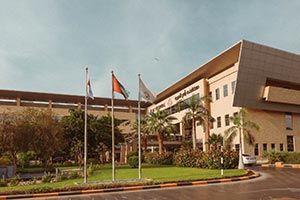
The #smart_clinic coincides with the new-born jaundice awareness campaign that is organized by Dubai Hospital’s neonatal intensive care unit and was inaugurated today by Dr Abdulrahman Al Jassmi, CEO of Dubai Hospital.
Jaundice is the yellowing of skin and eyes. This condition forms when there is too much bilirubin in the system. Bilirubin is a yellow pigment that is formed by the breakdown of dead red blood cells in the liver.
Dr Yaser El Saba, senior specialist neonatologist at Dubai Hospital, took part in the #smart_clinic. He said “Jaundice is very common in new-born babies. Jaundice is caused when babies have an increased level of bilirubin in their blood. Up to 60 per cent of all full term new-born babies and up to 90 per cent of preterm babies will become jaundiced two or three days after birth. Jaundice reaches its peak at about four days of life and then gradually disappears in most babies by the time they are two weeks old. Jaundice does not necessarily mean the baby is ill but it is important that jaundice is monitored to ensure that the bilirubin level does not get too high. If it goes very high and is left untreated it can lead to permanent brain damage resulting in mental retardation and cerebral palsy (CP) or even death.”
In order to ensure jaundice in new-born babies is closely monitored, the hospital chalks out an individual follow-up plan for every baby according to the level of bilirubin at the time of discharge. “It is critical for mothers to firstly ensure they do not miss new-born follow-up appointments and secondly to keep track of their new-born babies skin colour and symptoms. If they feel the baby is experiencing one or more symptoms, they should contact their healthcare provider and visit the hospital,” said El Saba.
He added that parents should take their baby to the doctor immediately if the baby is very yellow or orange, does not wake up easily or does not sleep at all, is not breastfeeding or bottle-feeding, is very fussy, does not have enough wet or dirty diapers, is crying inconsolably with a high pitch, is arched like a bow, has a stiff or floppy body and has strange eye movements.
Jaundice can also be caused due to some serious underlying conditions such as obstruction in the canals of the liver and the gall bladder which prevent excretion of the yellow substance from the liver. This type of jaundice needs urgent intervention. El Saba. “If the bilirubin level remains high and does not decrease in maximum two weeks, doctors will carry out several tests to check whether there is any underlying condition. Parents should also keep check of the bilirubin levels and constantly follow-up with the doctor . They should frequently check the colour of the stool of the baby, if it is pale or whitish yellow, they should visit the doctor immediately.”
In terms of treatment, El Saba said: “ Most babies will not need any treatment at all and jaundice will disappear in the next few days after birth. However, 10 to 15 per cent of jaundiced babes will need treatment. To avoid brain damage that can be caused by excessive bilirubin, phototherapy is used to reduce the level of bilirubin. Babies who need phototherapy are placed naked, except for some eye pads, in a cot or an incubator under special blue light. The light breaks down the bilirubin”
Dr. Anwar Khan, consultant neonatologist and in-charge of the neonatal ICU at Dubai Hospital and organizer of the new-born jaundice campaign at Dubai Hospital, said: “Sun is not recommended anymore. To reduce levels of bilirubin babies need long expose to sunlight which is not feasible because that means exposing the baby to some harmful sunrays Moreover, if the weather is too cold or too hot it is not good either. Parents should not try to treat jaundice that requires phototherapy by placing their baby under sunlight. Special lights and controlled surroundings are needed to treat jaundice safely.”
Khan added that all the studies that have been done on phototherapy confirms that it is safe and hospitals the world over have been treating babies using this technique. “ At the end of the day, our message to mothers is be alert about follow-up appointments, keep track of baby’s skin colour and be aware that phototherapy is a safe technique that effectively treats new-born jaundice and ensures the baby leads a normal life.”



- Joyalukkas Strengthens US Footprint with 8th Showroom in Iselin, New Jersey... [2674-Views]
- Group-IB launches Purple Teaming service to close the gap between security inv... [1939-Views]
- Mercato Takes Media on a Magical Summer Journey with The Grand Comedy Circus a... [1921-Views]
- Spain Defeats Argentina to Claim Second FIFA World Cup Title... [1164-Views]
- Government of Fujairah Signs Agreement to Purchase Gasoline Production from Et... [1070-Views]
- MAIR Group and Makani Real Estate Announce Mall of Al Ain Redevelopment and Ex... [1069-Views]
- H.H. Sheikh Ammar bin Humaid Al Nuaimi chairs Ajman Bank Board Meeting... [1055-Views]
- EGA wins the AI Vision and Strategy Award at the 2026 Manufacturing Leadership... [1003-Views]
- Bogdan guskov brings his perfect finishing record to ufc® fight night abu dhab... [973-Views]
- AutoPro and Chevrolet extend UAE mega promotion offering four vehicle prizes u... [951-Views]
- Dubai Summer Surprises: Shop, Save, and Win as the Great Dubai Summer Sale Arr... [938-Views]
- G-SHOCK MTG-B4000BD-1A: A New Language of Structural Beauty... [922-Views]
- Commercial Bank of Dubai prices USD 550 million Additional Tier 1 perpetual no... [909-Views]
- Dubai celebrates residents as destination's most powerful advocates through ne... [879-Views]
- Maserati previews Project GT4 at Goodwood Festival of Speed 2026... [858-Views]
- Amina Taher Appointed Chairwoman of the Arab Fashion Council... [856-Views]
- Standard Chartered: "UAE Business Activity to Accelerate in Q3 2026"... [844-Views]
- Grab discounts of up to 90% as the Great Dubai Summer Sale kicks off tomorrow ... [823-Views]
- Drillcube Opens EMEA Hub in Dubai — Bringing the Underground Mining One-Stop-S... [815-Views]
- EGA restarts Al Taweelah alumina refinery... [788-Views]
