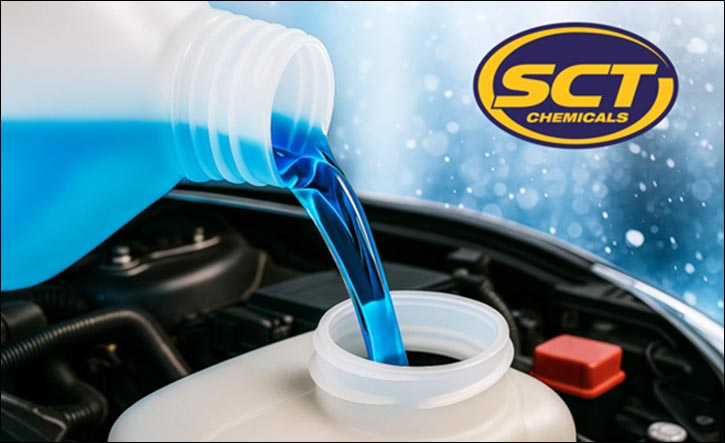
What Are Antifreeze and Coolants?
The cooling system is the invisible hero under your vehicle's hood. As long as it works properly, no one pays attention to it. But once it fails, the consequences can be catastrophic: engine overheating, cylinder head warping, piston seizure — all possible outcomes of choosing the wrong coolant or replacing it too late.
“In more than 30 years working in the lubricants industry, I've seen thousands of cases where owners of expensive vehicles tried to save money on coolant and ended up paying for a complete engine overhaul,” says Juri Sudheimer, founder of SCT Group and owner of production facilities in Klaipeda (Lithuania) and Dubai (UAE). Many people don't realize that antifreeze is not just pleasantly scented colored water — it is a complex chemical system that protects an engine from overheating, corrosion, cavitation, and freezing.

SCT Group's product portfolio under the MANNOL, PEMCO, CHEMPIOIL and FANFARO brands includes a complete range of antifreeze and coolant formulations suitable for any climate — from the arctic cold of Scandinavia to the extreme heat of the Middle Eastern deserts. Every formula is the result of years of research in our laboratories.
Engine coolant is a mixture of water, ethylene glycol (or propylene glycol), and additives. It prevents the cooling system from freezing in severe cold and from overheating during high ambient temperatures.
Ethylene glycol or propylene glycol forms the base of the coolant. These substances lower the freezing point (more precisely, the crystallization temperature) and raise the boiling point, since coolant can heat to temperatures well above 100°C.
Antifreeze (concentrate) and coolant (ready-to-use mixture) are often confused, but they are not the same. Antifreeze is a concentrate — a mixture of glycol and additives. Coolant is the final diluted solution that is poured into the engine, made from distilled or demineralized water and antifreeze concentrate. Tap water must never be used to dilute antifreeze.
Where Do the Problems Come From?
Approximately 33–40% of the energy generated by fuel combustion is removed by the cooling system. Because such a significant amount of heat must be dissipated, even minor malfunctions can severely disrupt the engine's thermal balance. This is why cooling system failure, leading to overheating, is one of the most common causes of engine breakdown.
According to experts, over 90% of overheating-related failures result from using an unsuitable or low-quality coolant. Engine components and motor oils are designed to operate within a specific temperature range. Once this range is exceeded, oil begins to degrade and engine components deform. Typical consequences include loss of compression due to reduced elasticity of piston rings, cylinder head distortion, or even piston seizure — leading to complete engine failure.
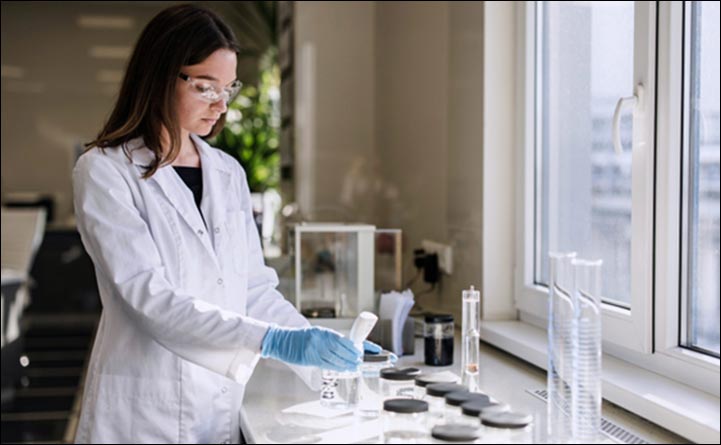
“Statistics from our service centers show that more than 40% of engine overheating cases are caused by improper coolant selection or delayed replacement,” notes Juri Sudheimer. “This is not only a question of technical knowledge but also of product quality on the market. That's why we place great emphasis on developing antifreezes that perform reliably even under extreme conditions.”
What Else Can Go Wrong?
• Corrosion
Why is corrosion in the cooling system dangerous?
A corrosion layer acts as an insulator because rust has 50 times lower thermal conductivity than metal. As a result, heat is transferred less effectively — as if the radiator were wrapped in fur — leading to chronic overheating. Corrosion particles can also cause the thermostat to stick, clog the radiator, damage the pump impeller, or cause pump bearing leaks.
• Sediment Formation
Using the wrong coolant, poor-quality formulations, or delaying replacement can lead to sediment formation. Solid particles circulate through the system, acting like an abrasive and damaging internal surfaces. This disrupts heat transfer and accelerates corrosion.
• Cavitation
Cavitation occurs when air bubbles form and collapse in low-pressure areas of the liquid — essentially microscopic explosions. This phenomenon is useful in ultrasonic cleaning but destructive inside an engine. When collapse events repeatedly occur near metal surfaces, they knock out micro-particles, forming pits that grow into erosion and eventually holes.
“Fighting cavitation has become one of our key research priorities,” says Juri Sudheimer. The SCT Chemicals FZE plant in Dubai, launched in February 2022, is equipped with specialized test benches for evaluating the anti-cavitation performance of coolants. Here, 188 employees work on formulations that protect cooling systems from corrosion, cavitation, and sedimentation.
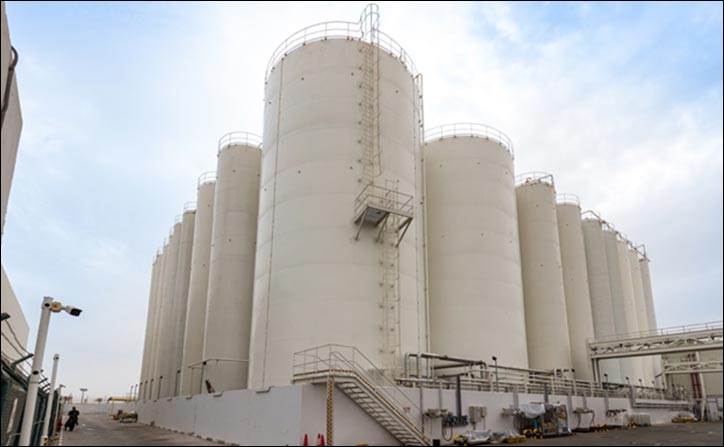
The plant's production capacity reaches 140,000 tons of lubricants and technical fluids annually, including a full range of antifreezes. ISO 9001, ISO 14001, ISO 45001, and ISO/IEC 17025 certifications confirm rigorous multi-level quality control. Meanwhile, the Klaipeda plant supplies the European market, where environmental and safety standards are particularly demanding.
What Is Antifreeze Made Of?
1. Glycol Base (90–95% of concentrate)
- Ethylene glycol — prevents freezing in winter and evaporation in high heat. Its disadvantage is that it oxidizes and can damage engine components, which is why a high-performance additive package is essential. Ethylene glycol is also toxic.
- Propylene glycol — can replace ethylene glycol; it has higher viscosity, which improves heat transfer. It is environmentally friendly and is used in foods, cosmetics, medicines, paints, electronic cigarette liquids, and even brewery and winery cooling systems.
“Choosing between ethylene and propylene glycol is always a balance between efficiency and environmental considerations,” explains Juri Sudheimer. SCT offers both options depending on market requirements. Our antifreeze product range includes:
- Inorganic (IAT) ethylene-glycol antifreezes — a reliable solution for older vehicles
- Organic (OAT) antifreezes, such as MANNOL AG11 Antifreeze (MN4111) and MANNOL AF12+ Antifreeze (MN4112)
- Hybrid antifreezes, like MANNOL AG13 Antifreeze Hightec (MN4113)
- Lobrid antifreezes, including MANNOL AF13++ Antifreeze High-performance (MN4115)
- Next-generation carboxylate coolants, such as our newest MANNOL 4016 DEX Coolant/Antifreeze
Each product is engineered for specific engine types and operating conditions.
2. Additives (around 5% of concentrate)
Corrosion inhibitors are essential as they minimize oxidation and prevent rust formation. Different regions use different additives: in Asia, carboxylates and phosphates dominate; in Europe, silicate-carboxylate combinations are common. Coolants also include anti-cavitation, anti-foam, lubricating additives, and dyes. The color helps distinguish formulations and visualize leaks.
3. Water (up to 5% of concentrate)
What Is Coolant Made Of?
Coolant is simply diluted antifreeze. For mild conditions, less antifreeze is required; for harsh climates — more. The antifreeze concentration must be between 33% and 67%. Each product has dilution tables based on the required freezing (crystallization) temperature.
Freezing temperature by concentration:
- 40% antifreeze / 60% water → approx. –30°C
- 50% antifreeze / 50% water → approx. –40°C
- 60% antifreeze / 40% water → approx. –50°C
- Undiluted concentrate → approx. –13°C, meaning you must never fill an engine with concentrate.
Antifreeze should be mixed with distilled or demineralized water. Tap water contains minerals that cause scale, sediment, and corrosion inside the cooling system.
What Happens If You Use the Wrong Coolant?
Just like using the wrong motor oil, the wrong coolant can cause severe engine damage. It may accelerate radiator corrosion, damage the water pump, head gasket, and other vital components — ultimately leading to overheating, costly repairs, and reduced engine lifespan.
How to Choose the Right Antifreeze
The main rule: follow your car manufacturer's recommendations. The manual specifies the type (IAT, OAT, Hybrid, Lobrid) and required specifications. Do not rely on color — it is only a dye.
To choose the correct MANNOL antifreeze, use the publicly available SCTApprovalControl service. In the specifications search section, you can select the appropriate coolant based on your car manufacturer's requirements.
When Should Antifreeze Be Replaced?
Replacement intervals depend on the type:
- Inorganic antifreezes — every 2–3 years or 60,000 km
- Hybrid antifreezes — every 3–5 years or 150,000 km
- Organic and lobrid antifreezes — every 5–10 years or 250,000 km
Even if the interval has not yet passed, regularly check the coolant condition. If it becomes cloudy, changes color, develops sediment, or an unpleasant odor — replace it immediately.
SCT Group's Quality Philosophy
“The engine cooling system is not a secondary component — it is a critical life-support system,” concludes Juri Sudheimer. Since 2004, we have invested over €90 million in production development and €3 million in R&D in 2024 alone. A significant part of these funds goes into advancing antifreeze formulations.
SCT Group's total production capacity exceeds 1 million liters per day, with storage tanks totaling over 60 million liters and a portfolio of more than 500 products. Our antifreezes operate in engines from Scandinavia to Australia, from Alaska to South Africa. Every container undergoes triple-level quality control at our plants in Klaipeda and Dubai.
Do not save on coolant. The cost of high-quality antifreeze is negligible compared to the cost of repairing an overheated engine. Choose wisely, replace on time — and your engine will reward you with long, reliable operation.
| 

 RSS Feed

