

Mayo Clinic maps patients' brain waves to personalize epilepsy treatment


February 3rd, 2026
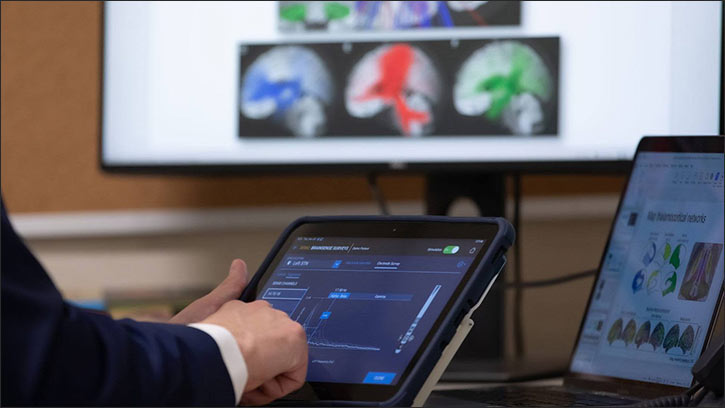
Mayo Clinic researchers have developed a new, personalized approach to deep brain stimulation (DBS) for people with drug-resistant epilepsy. By mapping each patient's unique brain wave patterns, the method allows physicians to target the precise area in the brain where stimulation is most effective, moving beyond the traditional one-size-fits-all approach.
DBS involves implanting electrodes in the brain to deliver electrical pulses that help prevent and control seizures. While effective, DBS is typically administered with electrodes placed in the same brain region across most patients. Mayo Clinic physician-scientists are now tailoring the treatment to an individual's seizure network before DBS placement.
"Our unique approach aims to tailor neuromodulation for each patient," says Nick Gregg, M.D., a Mayo Clinic neurologist and lead author of a paper published in the Annals of Neurology. "We're moving away from one-size-fits-all to an individualized approach that maximizes seizure network engagement to better modulate abnormal brain wave activity."
Once researchers identify the specific area in the thalamus — a small relay hub deep within the brain — that connects to a patient's seizure network, they can fine-tune stimulation settings for that individual. Because seizures occur infrequently, clinicians analyze erratic brain wave patterns that signal abnormal activity.
"We're trying to disrupt the pathological hypersynchrony and reduce network excitability to lower seizure risk," says Dr. Gregg.
Ten patients received this personalized approach while being evaluated for epilepsy surgery. The next phase of research will follow those who have since received permanent DBS implants using this personalized approach.
"The long-term goal is to quiet the seizure network, so it is eventually forgotten. Reorganizing the neuronal network could move us beyond controlling seizures to actually curing epilepsy," says Dr. Gregg.
This research is part of Mayo Clinic's Bioelectronic Neuromodulation Innovation to Cure (BIONIC) initiative, which unites clinical insight with cutting-edge engineering to deliver novel diagnostics and therapies. Through intellectual property development, strategic partnerships and patient-centered trials, BIONIC transforms innovation into impact — advancing care for complex neurological conditions.
- Dubai Health and Dubai Future District Fund Join Forces to Build a Global Health...
- SEHA CLINICS Announces Eid Al Fitr Operating Hours Across Abu Dhabi, Al Ain and ...
- Maternity Insurance UAE: A Complete Guide for Expecting Parents
- Mayo Clinic's AI tools help predict severe asthma risks in young children
- Future lab leaders compete for top prize at LabQ at WHX Labs
- Dubai highlights unified “Jabr” bereavement support system at World Health Expo
- Clinical chemists at WHX Labs urged to lead data-driven future of healthcare
- Dubai Health Authority highlights AI-powered ‘Risk Radar' system at World Health...
- Dubai Health Authority launches “HIMA” system for health inspection of vessels a...
- Aster DM Healthcare unveils game changing projects set to redefine the future of...
- PureHealth Reports AED 2 Billion Net Profit and Proposes AED 600 Million Dividen...
- St. George's University Prepares Future Physicians from Middle East region for G...
- France at World Health Expo Dubai 2026: 98 innovators Shaping the Future of heal...
- Mayo Clinic maps patients' brain waves to personalize epilepsy treatment
- More than 4.9 million beneficiaries and 49.6 million insurance claims Dubai's He...